Table of Contents
The industrial electronics sector relies heavily on stable power management. A single missing voltage regulator can stall an entire production line. While the acute shortages of 2021-2023 have stabilized, 2026 brings new challenges: localized inventory imbalances and geopolitical shifts that make single-sourcing high-risk. For any OEM manufacturer supply chain diversification or dual sourcing electronic components 2026 is no longer just a best practice, but an existential requirement.
At SupplyICs, our Field Application Engineers (FAEs) continually assist OEM procurement teams in validating drop-in replacements for high-demand TI power components. This guide provides actionable market intelligence and validated cross-references to fortify your supply chain.
The 2026 PMIC Market Landscape
The PMIC market has bifurcated. While consumer electronics PMICs are abundant, industrial and automotive-grade regulators (particularly high-voltage step-down converters and multi-channel PMICs) maintain stubborn lead times of 16-24 weeks. Similar to the volatile mcu lead times stmicroelectronics 2026 projections, TI’s internal manufacturing expansion (such as the RFAB2 and Sherman fabs) has significantly improved aggregate output, yet localized allocation issues persist for specific TPS-series power components. This highlights the urgent need for a robust second source or dual sourcing or supplier qualification semiconductor components manufacturer 2026 framework.
Procurement managers must transition from reactive purchasing to proactive BOM resilience. The cornerstone of this strategy is the P2P Cross-Reference matrix.
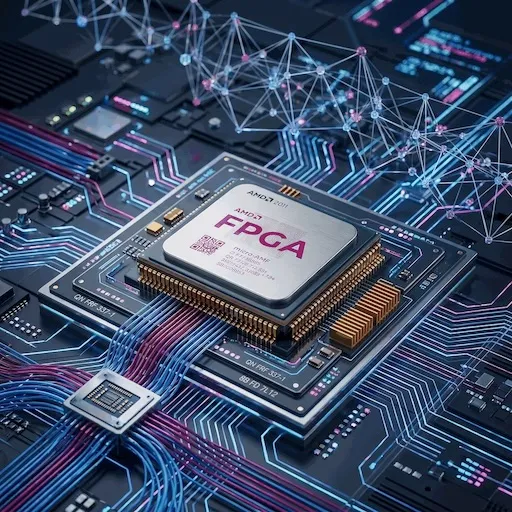
 Fig 1: Industrial-grade PMICs undergo rigorous testing. Identifying P2P alternatives requires matching not just footprints, but thermal and transient performance.
Validated P2P Alternatives for Popular TI PMICs
When evaluating a Pin-to-Pin (P2P) alternative, footprint compatibility is only the first step. Our engineering team validates switching frequencies, input voltage ranges, and thermal resistance ($R_{\theta JA}$) before recommending a substitute.
Here is a vetted cross-reference table for some of the most sought-after TI components in 2026:
| TI Base Part Number | Description | Validated P2P Alternative | Key Considerations |
|---|---|---|---|
| TPS62130 | 3A, 3-17V Step-Down Converter | ISL85413 (Renesas) | Exact footprint; verify enable pin logic thresholds. |
| LM2596S-5.0 | 3A, 5V Step-Down Voltage Regulator | XL2596-5.0 (XLSEMI) | Widely used in mature designs; identical thermal pad requirements. |
| TPS7A4700 | 1A, Ultralow-Noise LDO | LT3042 (Analog Devices) | ADI offers superior PSRR, though unit cost may be slightly higher. |
| BQ24040 | 1A Single-Input Li-Ion Charger | STBC02 (STMicroelectronics) | ST’s alternative integrates additional protection features. |
(Note: Always consult your hardware engineering team and perform prototype validation before approving a BOM change. Contact our FAE team for datasheets and sample availability.)
Case Study: Rescuing an Industrial IoT Deployment
The Challenge: A European industrial automation client faced a 26-week lead time for the TI TPS65218D0 (a complex PMIC used alongside NXP i.MX processors), threatening a critical Q2 product launch.
The SupplyICs Solution:
- Market Intelligence: Our proprietary global inventory tracking identified that traditional franchised channels were completely allocated for the next two quarters.
- Alternative Sourcing: Our FAEs recommended transitioning to the PCA9450 family from NXP Semiconductors, specifically optimized for the i.MX 8M series.
- Execution: While not a direct P2P replacement, we sourced the alternative ICs and provided the reference design modifications within 48 hours. The client adapted their PCB spin, saving the launch timeline and securing inventory for 50,000 units.
QA and Authentication: The Silent Sourcing Killer
When sourcing PMICs outside of direct franchise agreements—especially for high-demand TI parts—counterfeiting remains a severe threat in 2026. Counterfeiters often remark commercial-grade parts as industrial-grade, leading to catastrophic field failures under thermal stress.
As emphasized by the ERAI (Electronic Resellers Association International), visual inspection is no longer sufficient. SupplyICs employs advanced X-Ray inspection and decapsulation testing to verify the silicon die against known-good OEM specifications, ensuring 100% authenticity for every shipped component.
 Fig 2: Microscopic decapsulation analysis reveals the original manufacturer’s die markings, a non-negotiable step in mitigating counterfeit risks.
Strategic Recommendations for Q3/Q4 2026
- Implement Dual-Sourcing at the Design Phase: Mandate that hardware engineers specify at least one alternate component for every critical PMIC on the BOM. The typical semiconductor second source qualification time 12-24 months can be drastically reduced by pre-approving P2P alternatives during the initial R&D stage.
- Leverage Independent Stocking Distributors: Partner with hybrid distributors who hold physical inventory of both leading brands like Texas Instruments and their European/Asian alternatives.
- Monitor Foundry Capacity: Keep an eye on global 200mm and 300mm analog foundry utilization rates, which act as leading indicators for future PMIC lead times.
By integrating robust P2P cross-referencing into your standard operating procedures, your procurement team can transform supply chain vulnerability into a competitive advantage.
Looking for hard-to-find Texas Instruments components or need help identifying validated alternatives? SupplyICs combines global market reach with rigorous in-house quality assurance. Submit your RFQ today and our specialists will respond within 2 hours.
Frequently Asked Questions (FAQ)
What are the main sourcing challenges for this semiconductor family in 2026?
Texas Instruments PMICs, highly allocated in 2026, require engineering-led sourcing. If a primary regulator is allocated, teams must evaluate pin-comp...