Table of Contents
- Verify the Authorized Relationship at the Time of Purchase
- Match the Channel to the Memory Product and Program
- Normalize Every Quote to the Full Micron Ordering Code
- Compare Authorized and Independent Offers on Total Evidence
- Qualify an Independent Memory Lot by Risk
- Build a Memory Continuity Plan Around Decision Triggers
The right Micron distributor depends on the exact memory product, region, program status, required pedigree, and delivery risk. An authorized channel is the default for planned production because it provides a manufacturer-recognized commercial path. An independent channel can help with obsolete or constrained original parts, but it transfers more verification and acceptance responsibility to the buyer.
Do not make the decision from a seller’s logo page or a market-wide lead-time claim. Verify the channel for the transaction, normalize the full Micron ordering code, and compare the evidence attached to the quoted material.
Verify the Authorized Relationship at the Time of Purchase
Micron maintains a region-specific authorized-distributor directory. In the Americas, the current page includes companies such as Arrow, Avnet, DigiKey, Edge Electronics, Mouser, TD SYNNEX, and WPG Americas, among others. The lists differ across Asia, EMEA, Israel, and Japan.
Directory presence is the first check, not the last. Confirm:
- The legal entity on the quote and invoice matches the entity or corporate relationship listed by Micron.
- The selling location and ship-from region fall within the distributor’s current scope.
- The quoted product category and ordering code are covered by the relationship.
- The material will be supplied through the authorized path, rather than sourced by the same distributor from a third party.
- Warranty, return, product-change, and quality-complaint procedures are stated in writing.
Save a dated screenshot or link with the source decision. Manufacturer networks change, and the same company name can represent different legal entities or business units in different countries.
Micron directs customers to local authorized distributors or a Micron sales office for pricing and availability. For a strategic or unusual product, ask Micron sales support to confirm the channel rather than extrapolating from a distributor’s catalog listing.
Match the Channel to the Memory Product and Program

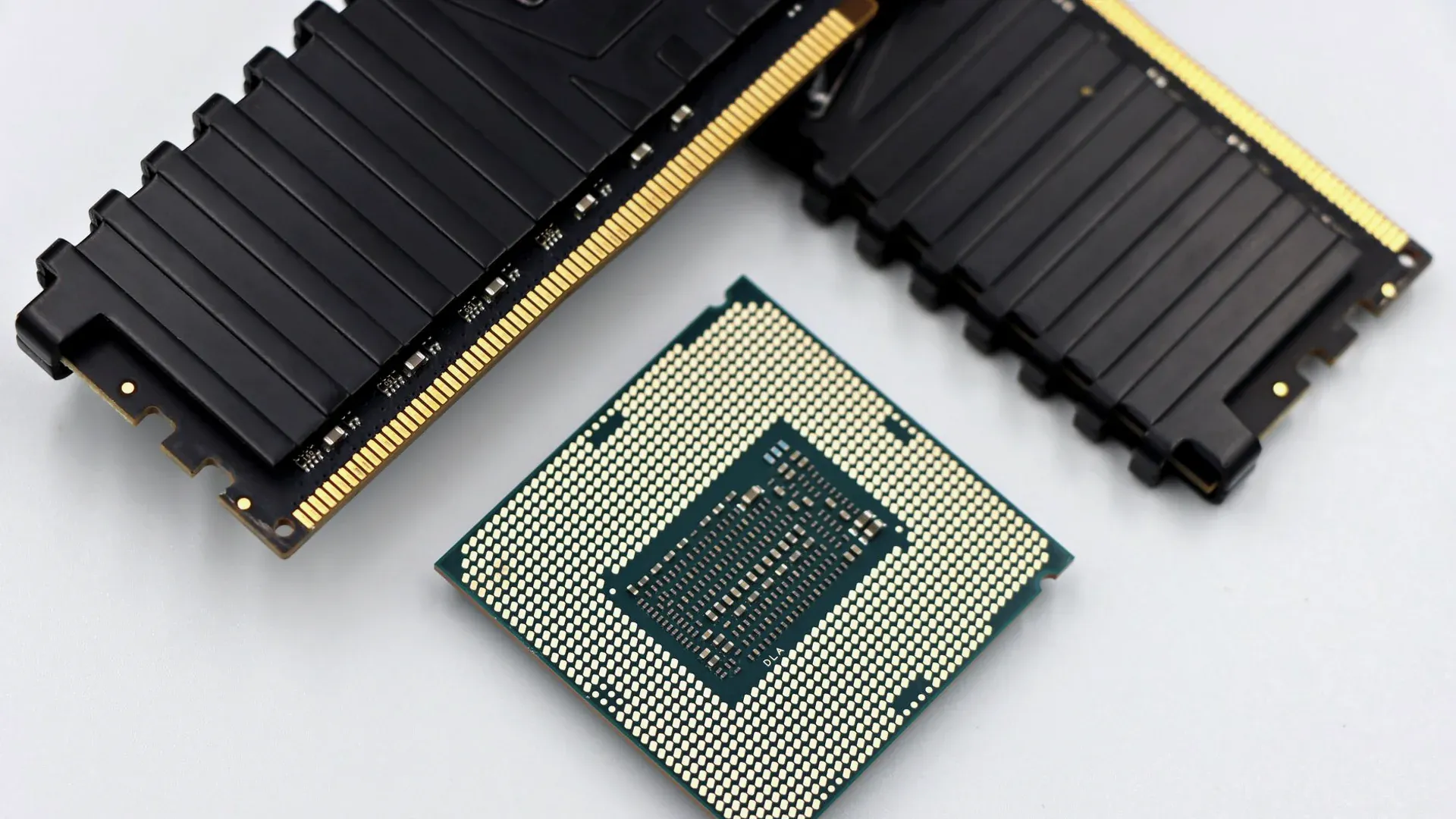
“Micron memory” includes components and finished products with different commercial models. Record whether the BOM calls for a DRAM or NAND component, managed NAND, NOR flash, module, SSD, or a product associated with a customer-specific platform.
| Requirement | Preferred starting path | Why |
|---|---|---|
| Forecasted production on an active part | Micron or current authorized distributor | Manufacturer-recognized supply, commercial support, and change notification |
| Engineering samples and catalog quantities | Micron sample process or authorized catalog distributor | Clear order code and manageable quantity |
| Allocated strategic product | Micron account team and nominated channel | Allocation and technical integration may be customer-specific |
| Obsolete or last-time-buy part | Authorized residual stock, licensed continuation where applicable, then qualified independent source | Product status and pedigree matter more than catalog visibility |
| Unplanned shortage on an original approved part | Authorized recovery first; independent stock under risk-based controls if approved | Avoids redesign while preserving a documented exception process |
HBM deserves separate treatment. Micron’s June 2026 quarterly reporting describes HBM4 high-volume shipments and continued HBM roadmap development. These products are not equivalent to ordinary distributor-stock DDR components. Check the device generation, stack, interface, integration partner, program authorization, and supply agreement before treating any open-market HBM listing as usable inventory.
For standard memory components, a visible distributor quantity is still only a snapshot. Confirm whether the stock is factory sealed, physically on hand, allocated to another customer, or merely associated with a supplier lead-time estimate.
Normalize Every Quote to the Full Micron Ordering Code
Memory part numbers encode density, organization, speed, package, temperature or application options, and other attributes. A shortened base number can hide a difference that affects layout, firmware, timing, qualification, or thermal performance.
Build the comparison record with:
- Full Micron part number and manufacturer part description.
- Product family, density, organization, interface, speed grade, voltage, and package.
- Temperature and application grade, including automotive qualification where required.
- Product status, PCN history, last-time-buy date, and suggested successor.
- Packing method, tray or reel quantity, moisture-sensitivity information, and factory seal status.
- Date code, lot code, country of origin, and label photos for physical stock.
- Quote date, quantity, price, currency, Incoterm, ship date, and whether delivery is factory acknowledged.
Do not compare a distributor’s estimated “lead time” with an independent seller’s “in stock” label as if both carry the same certainty. Ask for the factory acknowledgement behind the authorized date and timestamped physical evidence behind the stock claim.
Avoid class-wide assertions such as “automotive DRAM is 58 weeks.” Delivery varies by part, package, customer commitment, location, and order date. A defensible market update aggregates dated quotes for a defined basket of orderable parts and reports the range and exceptions.
Compare Authorized and Independent Offers on Total Evidence
An authorized offer and an independent offer solve different problems.
| Dimension | Authorized channel | Independent channel |
|---|---|---|
| Manufacturer relationship | Confirmed for the transaction | No current manufacturer authorization for that transaction |
| Pedigree | Expected through the authorized path | Varies by original source and ownership history |
| Warranty and returns | Manufacturer/distributor program terms | Seller-specific terms |
| Availability | Factory and channel allocation | Limited to verified physical stock or upstream source |
| Price | Contract or channel price | Market price affected by scarcity and evidence quality |
| Buyer controls | Verify scope and order accuracy | Qualify seller, supply path, lot, inspection, test, and disposition |
Unit price alone hides the cost of schedule, inspection, redesign, excess, and nonconformance. Use scenario-based total cost:
- Cost of waiting for the authorized delivery, including schedule mitigation.
- Premium and verification cost for an independent original part.
- Engineering and qualification cost for a substitute or redesign.
- Residual inventory risk if demand changes or the platform ends.
- Field and recall exposure based on the product’s criticality.
Avoid generic claims that authorized supply has “near-zero” counterfeit risk or that every independent with a certificate is low risk. Authorized sourcing materially improves pedigree, but buyers still need correct part-number control, receiving inspection, storage, and handling. Independent supply can range from documented excess inventory to an opaque multi-broker chain.
Qualify an Independent Memory Lot by Risk

Start with seller and source evidence before selecting tests. Request the seller’s legal identity, ownership of material, upstream invoice or chain-of-custody evidence where available, lot and label photos, quantity, location, storage history, and return terms.
Then define lot-specific controls:
- Reconcile manufacturer labels, part number, quantity, date and lot codes, packaging, and shipping documents.
- Inspect packaging and devices for remarking, resurfacing, lead or ball condition, contamination, and mixed lots using applicable documented methods.
- Use X-ray or other nondestructive comparison where package construction and risk justify it.
- Specify electrical testing against a current datasheet and an approved sample plan when visual evidence is insufficient.
- Escalate destructive analysis only under an approved plan that defines sample ownership and acceptance criteria.
- Retain photographs, raw data, samples, and disposition records for the required product lifetime.
AS6081 concerns a distributor’s counterfeit-avoidance system. IDEA-STD-1010 describes inspection practices. ISO/IEC 17025 concerns laboratory competence for accredited activities. None independently proves that a Micron lot is authentic, conforming, or suitable for the buyer’s application.
Our supplier qualification framework and counterfeit-detection guide provide the broader controls.
Build a Memory Continuity Plan Around Decision Triggers
For each critical Micron line, define the authorized primary source, any approved secondary source, forecast owner, target coverage, product-status monitor, and escalation thresholds.
Useful triggers include:
- Factory acknowledgement moves beyond the program’s latest acceptable receipt date.
- Allocation falls below the committed build quantity.
- A product change or discontinuance shortens the remaining qualification window.
- Spot-market prices or date-code dispersion suggest tightening supply, requiring confirmation rather than an automatic buy.
- Remaining qualified inventory becomes shorter than the redesign and revalidation duration.
When a trigger fires, compare authorized recovery, schedule change, approved independent original stock, and redesign as explicit options. Document who can approve each channel and which lots or builds the exception covers.
This approach preserves the original purpose of a Micron authorized-versus-independent guide without relying on unverifiable blanket lead times, premiums, or customer anecdotes. The decision follows the exact product, current channel status, evidence package, application risk, and time available to qualify another option.
Frequently Asked Questions (FAQ)
How can I verify an authorized Micron distributor?
Check the distributor against Micron's current authorized-distributor directory for the relevant region, then confirm that the quoting legal entity, location, product category, and transaction fall within that relationship. Save the verification date with the sourcing record.
Is an independent distributor the same as the gray market?
No. Independent distribution describes a channel without current manufacturer authorization for the transaction. Supplier identity, ownership, quality system, chain of custody, inspection, and testing can vary widely, so buyers should qualify the seller and each lot by risk.
Does AS6081 certification prove that a Micron lot is authentic?
No. AS6081 addresses counterfeit-avoidance practices in independent distribution. Certification can support supplier qualification, but authenticity and conformance still depend on the lot's pedigree, inspection, testing, documentation, and acceptance criteria.
Should HBM be purchased from an independent distributor?
HBM is typically tied to strategic customer programs, specific integration requirements, and controlled allocation. An unsolicited open-market HBM offer requires exceptional scrutiny of part identity, ownership, storage, pedigree, compatibility, and the manufacturer's authorized supply path.