
Table of Contents
- Where Is the Sourcing Risk in an Automation BOM?
- How Should PLC Main-Control Parts Be Selected?
- How Should Fieldbus and Industrial Ethernet ICs Be Sourced?
- What Makes Motor-Control Semiconductor Sourcing Different?
- Does Mature-Node Production Automatically Mean High Risk?
- How Should Lifecycle and PCN Control Work?
- When Is a Cross-Reference a Real Alternate?
- How Should Legacy and Independent Stock Be Controlled?
Industrial automation sourcing is a system-lifecycle problem. A PLC, drive or safety controller may remain in production and field service long after the semiconductor market has moved to new packages, interfaces and process technologies. The purchasing goal is therefore not simply to find an MCU or fieldbus device at today’s price. It is to preserve a controlled build and repair path for the complete platform.
This guide focuses on the control layer: PLC processing, industrial networking, motor control, power, isolation and supporting logic. Sensors and connected edge nodes have a different risk profile, covered in our industrial IoT sourcing guide.
Where Is the Sourcing Risk in an Automation BOM?
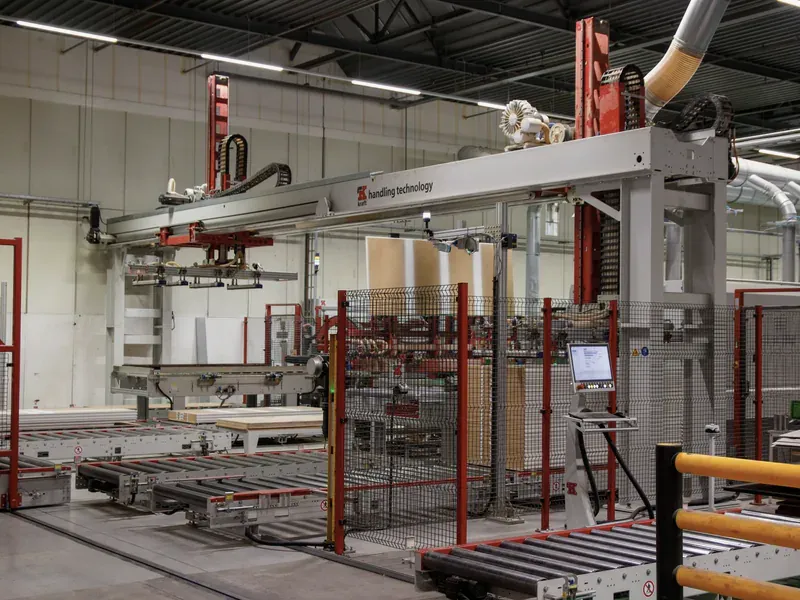
The highest-risk part is not always the most expensive. A low-cost isolator, clock, memory or interface transceiver can stop a build if it is single-sourced, difficult to validate or tied to a certification baseline.
Segment the BOM by function and recovery effort:
| Function | Typical semiconductor scope | Key release evidence | Common sourcing exposure |
|---|---|---|---|
| Main control | MCU, MPU, FPGA, memory, clock and PMIC | Software image, boot chain, memory map, timing and thermal validation | High switching cost and package dependence |
| Industrial network | Ethernet switch or PHY, fieldbus controller, CAN/RS-485 transceiver, isolation | Protocol conformance, latency, topology and EMC results | Firmware coupling and single-protocol devices |
| Motor control | Real-time MCU or DSP, gate driver, current sense, encoder interface, power stage | Control-loop behavior, protection thresholds and thermal margin | Exact peripheral and power-package dependence |
| Safety channel | Safety MCU, watchdog, diagnostic power device, isolator | Safety manual, failure analysis and system assessment | Documentation and change-control constraints |
| Supporting circuitry | Logic, analog, EEPROM, oscillators, protection and passives | Parametric limits and environmental test results | Overlooked lifecycle and package risk |
Score each line using time to qualify an alternate, not only quoted delivery. A part with 16 weeks of coverage and a six-month validation cycle is more urgent than one with eight weeks of coverage and a pre-approved second source.
At the cabinet or controller power entrance, separate fault limiting from reverse-current control. Use the eFuse IC selection guide to define inrush, current-limit, retry, and thermal behavior; use the ideal-diode controller guide when reverse blocking, supply ORing, or low forward loss is the primary requirement.
How Should PLC Main-Control Parts Be Selected?
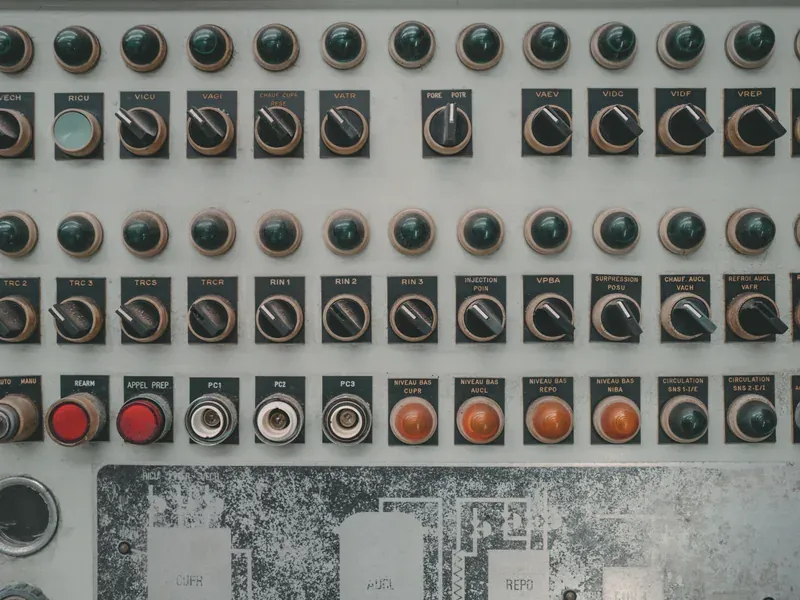
Start with the application requirements that create switching cost: deterministic I/O, operating system, security, memory, fieldbus support, functional safety, package, thermal environment and expected service period. Then evaluate the exact orderable part and its lifecycle record.
Manufacturer longevity programs can help, but their terms must be read at part level. NXP’s current Product Longevity program lists participating products and a stated 10- or 15-year minimum period, with conditions and product-specific dates. It does not mean that every NXP processor or MCU has the same commitment.
For a new PLC platform, capture this evidence before design freeze:
- Active lifecycle status for the full orderable part number.
- The manufacturer’s written longevity terms, where offered.
- Package and temperature options that engineering has actually validated.
- Software-tool and security-update dependencies.
- At least one migration path, even when it is not pin compatible.
- Ownership of source code, configuration files and test fixtures needed for requalification.
A long-lifecycle statement reduces discontinuance risk, but it does not guarantee short delivery or fixed pricing. Forecast and delivery commitments still need their own commercial controls.
How Should Fieldbus and Industrial Ethernet ICs Be Sourced?
For the physical interface, use an RS-485 transceiver selection record that includes topology, edge rate, fail-safe behavior, and power states. Exposed ports also need a coordinated TVS clamping and surge-waveform review; a transceiver’s component ESD rating is not a complete port-level surge result.
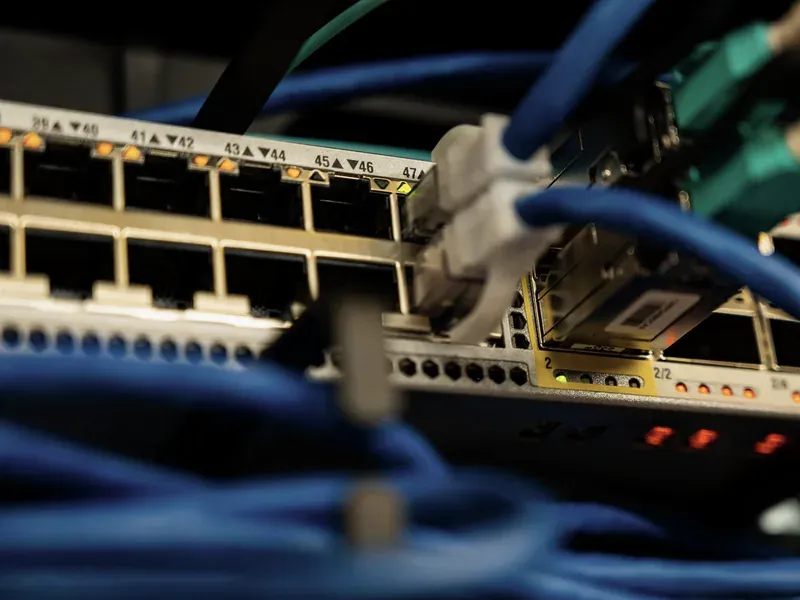
Industrial-networking parts combine silicon, protocol behavior, software and conformance requirements. A replacement PHY may match headline speed while differing in timestamping, diagnostics, cable reach, EMI behavior or driver support. A protocol controller can impose a much larger firmware change.
Maintain separate alternate plans for three layers:
| Layer | Examples | Alternate review |
|---|---|---|
| Physical | Industrial Ethernet PHY, CAN or RS-485 transceiver, isolation | Pinout, magnetics, protection, timing, EMC and temperature |
| Data link and switching | Ethernet switch, fieldbus controller, TSN capability | Latency, queues, synchronization, management and conformance |
| Processor integration | MCU/MPU peripheral, programmable real-time engine, FPGA implementation | Firmware, toolchain, licensing, performance and safety impact |
Do not label EtherCAT or PROFINET parts as universally scarce without current quote evidence. Instead, track the exact protocol devices used in released platforms and record whether an alternate would require a board spin, firmware port or external certification.
Standards also evolve. The active IEEE/IEC 60802-2026 defines Time-Sensitive Networking profiles for industrial automation. It is relevant to designs adopting standardized TSN behavior, but it does not make two switches or processors interchangeable. Procurement should obtain the product’s conformance evidence and the system team’s approved configuration.
What Makes Motor-Control Semiconductor Sourcing Different?
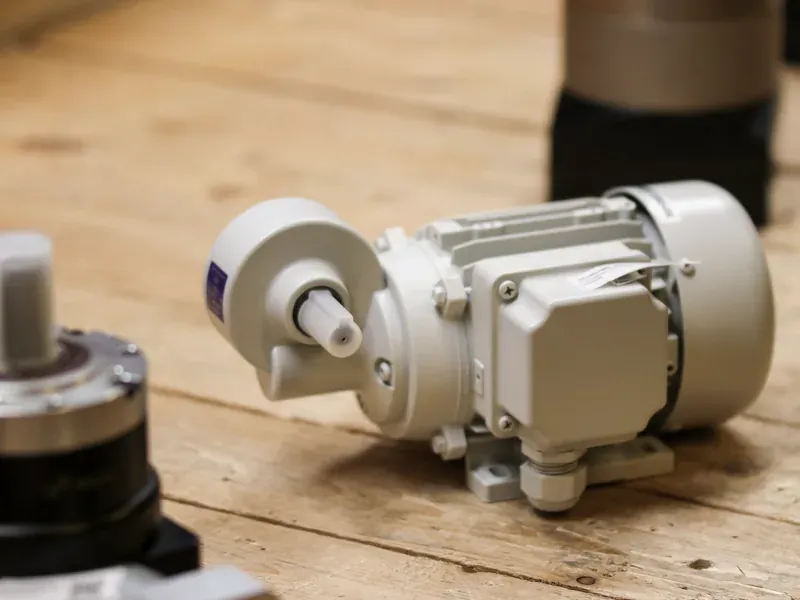
Motor-control substitutions can change the behavior of the power stage. The MCU or DSP must support the required PWM timing, ADC synchronization, encoder interface and control-loop workload. The gate driver and current-sense chain determine protection timing and measurement accuracy; the current-sense amplifier selection guide turns common-mode range, shunt loss, gain, and dynamic range into a reviewable error budget. The power device and package determine losses, thermal cycling and layout parasitics.
Qualify alternates as a signal chain:
- Compare absolute maximum ratings and recommended operating conditions.
- Review propagation delay, dead-time behavior and protection thresholds across temperature.
- Re-run worst-case loss and thermal calculations for the power stage.
- Confirm gate charge, switching speed and layout effects with the actual board.
- Test fault behavior, not only normal operation.
- Repeat the EMC and safety work required by the product’s change process.
For a variable-frequency drive or servo, a “better” new device can still destabilize the validated design because faster edges increase ringing or emissions. Treat the datasheet comparison as the screening step and bench validation as the release evidence.
Does Mature-Node Production Automatically Mean High Risk?
No. Process node alone is not a purchasing forecast, and the node is often not disclosed for a specific mixed-signal or industrial IC. Mature processes can have stable, efficient production; newer processes can also face package, test or allocation constraints.
Use observable risk indicators instead:
- A product moves from active to not recommended for new designs.
- Product-change or discontinuance notices affect the exact orderable part.
- Authorized quotes lose committed dates or are repeatedly rescheduled.
- One package or grade loses availability while other family variants remain active.
- The supplier proposes a migration part or compatible replacement.
- The assembly, test or wafer site changes and triggers requalification work.
This evidence can be assigned to an owner and a deadline. A broad statement that AI demand is squeezing all 28-to-180-nanometer products cannot.
How Should Lifecycle and PCN Control Work?
For connected products within the relevant EU scope, maintain security contacts and hardware/firmware version mapping alongside lifecycle records. The CRA supplier-evidence checklist separates preparation for September 2026 reporting obligations from the Act’s later main application date.
Lifecycle labels come from the manufacturer, not from a universal table imposed by a standard. TI, for example, publishes its own product life-cycle policy and identifies statuses including active, not recommended for new designs, last time buy and obsolete. Other suppliers use their own labels and terms.
Create one normalized internal workflow while retaining the original notice:
| Supplier event | Internal action |
|---|---|
| Product change notification | Engineering and quality assess form, fit, function, process, site and qualification impact |
| Not recommended for new designs | Block new use and set an alternate qualification deadline |
| Discontinuance or last-time buy | Calculate production, service, yield loss and attrition demand before committing inventory |
| Obsolete | Restrict procurement to approved legacy channels and defined inspection plans |
The JESD48 product-discontinuance standard addresses supplier notification practices; it does not define a universal active-to-obsolete lifecycle model for buyers. Store every notice with the affected manufacturer part number, internal part number, products, owner, decision and evidence of completion.
For safety-related electrical or programmable systems, IEC 61508 provides a functional-safety lifecycle framework. A semiconductor change must be evaluated within the equipment’s safety process. The presence of a safety-capable MCU does not certify the completed controller.
When Is a Cross-Reference a Real Alternate?
Pin compatibility is useful for screening simple logic, analog and interface parts, but it is not sufficient approval. A TI and Nexperia logic device with the same 74-series function can differ in supply range, input thresholds, output drive, propagation delay, power-up behavior, package dimensions and qualification.
Use the pin-to-pin replacement playbook to build a comparison matrix, then add industrial requirements: temperature, EMC, functional safety, software, service documentation and customer approval. Record the test results and approved manufacturer part number in the BOM. An engineer’s email that two parts “look equivalent” is not durable release evidence.
Prioritize alternate work before a lifecycle event. The most valuable matrix is not a list of possible parts; it is a list of tested parts, the conditions under which they are approved and the remaining constraints.
How Should Legacy and Independent Stock Be Controlled?
Independent distribution becomes relevant when an active authorized order leaves a coverage gap or when a service part is no longer available through the original channel. The goal is to source a specific lot under a documented risk decision.
Require the seller to identify the lot, quantity, date code, packaging condition and available traceability before purchase. Define inspection and testing based on device type, storage sensitivity, application consequence and evidence quality. External visual inspection alone may be adequate for one low-risk lot and inadequate for a safety-related processor or high-value FPGA.
Do not describe parts as “ISO 17025 inspected.” ISO/IEC 17025 applies to laboratory competence and accreditation scope, not to a component’s authenticity. When a laboratory report is used, verify that the relevant test method is within the laboratory’s scope and that the report identifies the sampled lot.
Finally, keep independent coverage time-bounded. Continue the authorized order, lifecycle migration or approved alternate work in parallel. That preserves production without turning a temporary shortage response into an unmanaged long-term source.
For equipment already installed in the field, use the industrial spare-parts repair, stock, or redesign decision to connect the failed unit, downtime window, legacy-stock evidence, spare quantity, and upgrade trigger.
Frequently Asked Questions (FAQ)
Can a commercial-grade MCU replace an industrial-grade MCU?
Only after engineering verifies the exact orderable part against the equipment's temperature, reliability, lifetime and compliance requirements. A similar core or pinout does not establish an acceptable grade substitution.
What is the lead time for industrial PLC ICs in 2026?
There is no reliable category-wide number. Delivery varies by exact part, package, grade, quantity, region and channel. Buyers should maintain dated quotes and committed deliveries for the critical parts in each released PLC platform.
How should a 15-to-20-year equipment lifecycle be supported?
Choose products covered by documented longevity policies where possible, monitor PCNs and discontinuance notices, keep approved alternates current, and calculate service demand before any last-time buy. Do not assume a family name guarantees long-term availability.
When is a pin-compatible alternate safe to use in industrial equipment?
After electrical, timing, thermal, software, EMC and safety effects have been reviewed and the required validation has passed. Pin compatibility is the start of the analysis, not the release decision.