Table of Contents
Sourcing Field Programmable Gate Arrays (FPGAs) has always been a complex task, but in mid-2026, the stakes have never been higher. When aerospace, defense, and industrial automation clients search for a reliable Xilinx integrated circuits distributor, they aren’t just looking for parts—they are looking for absolute certainty. At SupplyICs, we handle these critical Xilinx components daily, and we’ve seen first-hand why procurement teams are struggling.
Why Are Lead Times for High-End FPGAs Still Extended?
The primary challenge in sourcing Xilinx components stems from the unprecedented demand in AI infrastructure and advanced packaging bottlenecks. TSMC’s CoWoS (Chip-on-Wafer-on-Substrate) packaging capacity remains tight. According to a 2026 TrendForce analysis, packaging bottlenecks limit the output of advanced FPGAs (like the Virtex UltraScale+ series), extending lead times beyond 40 weeks for certain high-end SKUs.
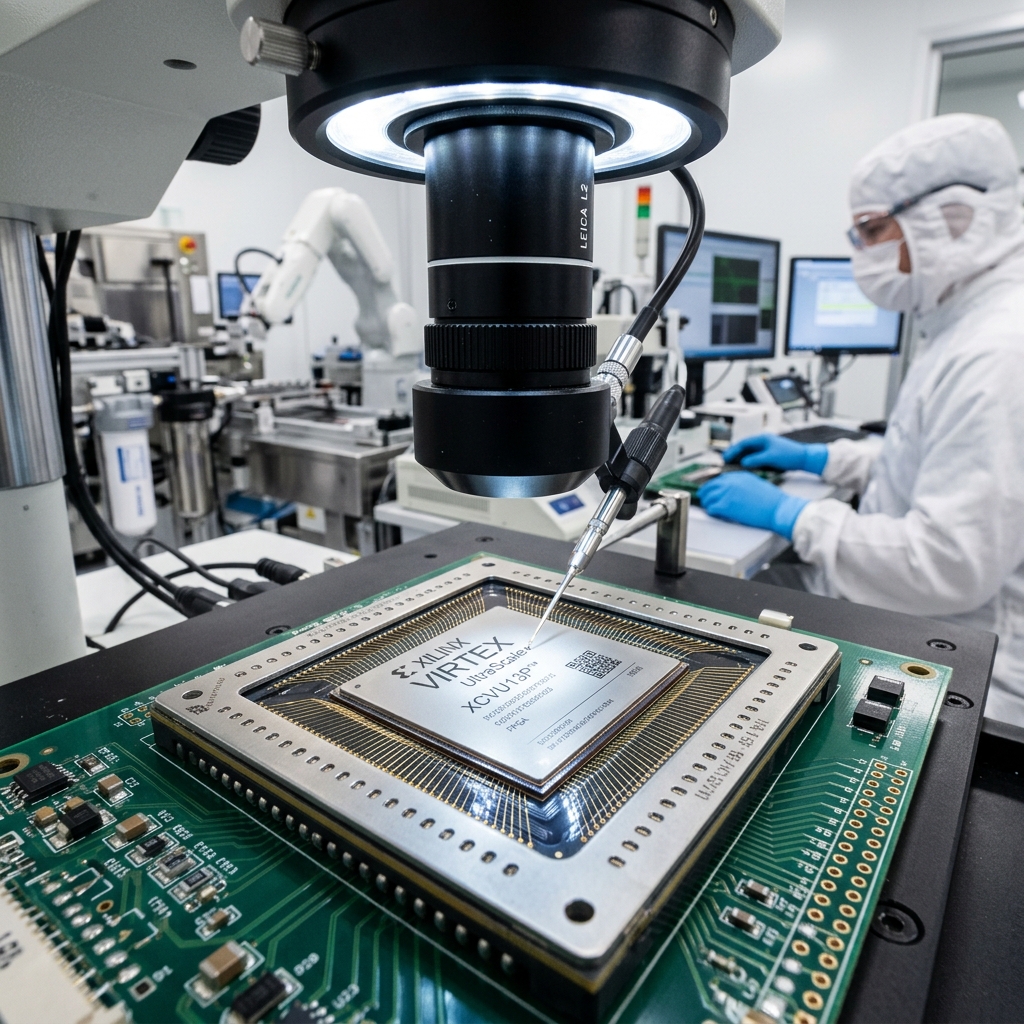
How Do We Authenticate Xilinx Components as an Independent Source?
A significant concern for buyers relying on the open market instead of direct Xilinx authorized distributors is the risk of counterfeit parts. Because FPGAs (sometimes misspelled as xixinx) are high-value items, they are prime targets for cloning, blacktopping, and relabeling.
Last month, a Tier-1 defense contractor urgently needed a specific, older-generation Spartan-6 FPGA that had long been on allocation. They couldn’t wait for the standard 52-week lead time. We sourced the parts through our vetted network, but sourcing is only step one.
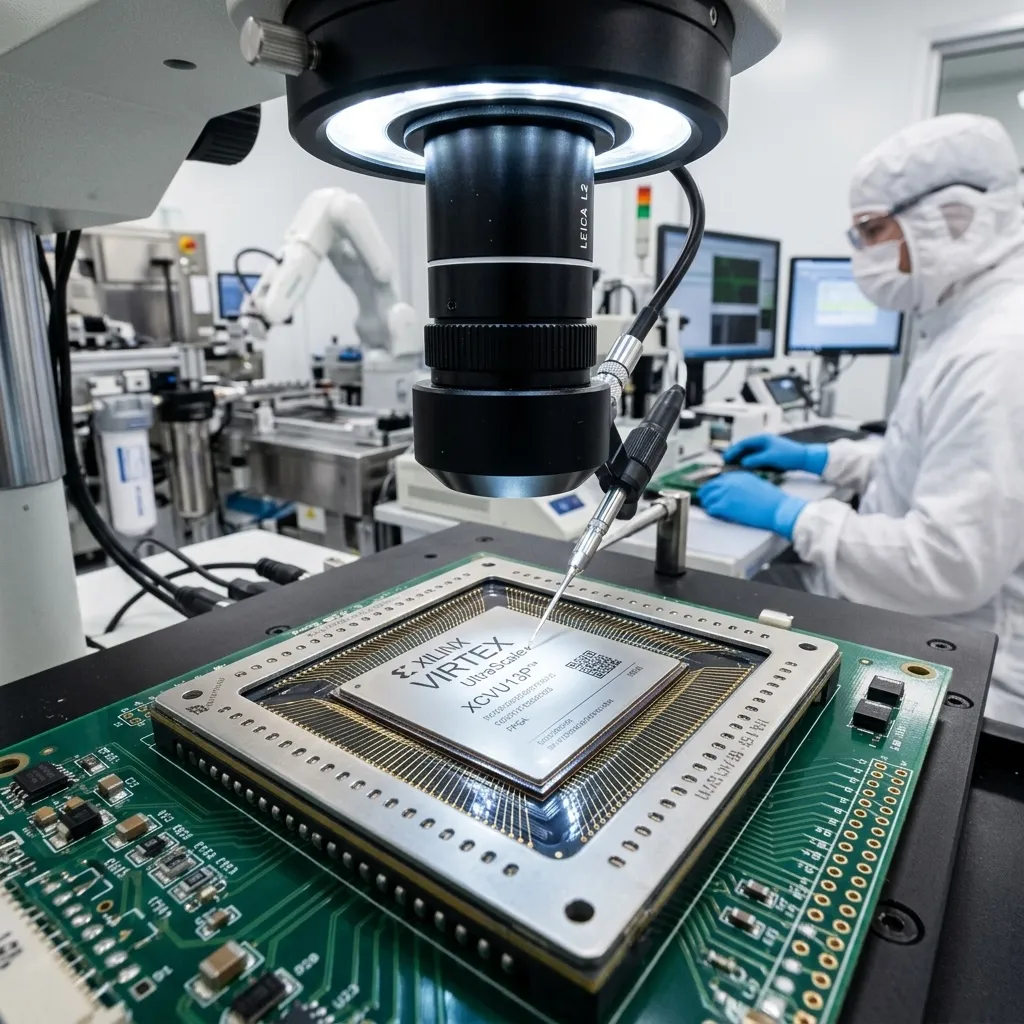
Here is our mandatory internal QA process for every high-value FPGA:
- Visual and Microscopic Inspection: We check for evidence of blacktopping (remarking), ensuring the texture and laser etching match known-good OEM templates.
- X-Ray Fluorescence (XRF): We verify the elemental composition of the leads to confirm RoHS compliance and detect counterfeit metallization.
- X-Ray Imaging: We inspect the internal wire bonds and die layout. A relabeled part might look perfect on the outside but have the wrong internal architecture.
What Are the Real-World Costs of Counterfeit FPGAs?
If an unverified component makes it onto a PCB, the financial impact is catastrophic.
| Failure Stage | Estimated Cost Impact (Per Board) | Mitigation Strategy |
|---|---|---|
| Component Level | $50 - $5,000 | Purchase exclusively from verified suppliers with in-house QA. |
| PCBA Assembly Level | $5,000 - $20,000 | Implement incoming 100% automated optical inspection (AOI). |
| Field Deployment | $100,000+ (plus reputation damage) | Use independent lab verification and secure supply chain partners. |
Data Source: SupplyICs QA Cost Assessment 2026.
How Can You Secure Your FPGA Supply Chain?
While we respect the role of direct Xilinx authorized distributors, we know that rigid franchise channels cannot always accommodate urgent spot-buys or End-of-Life (EOL) component searches. As an agile, independent distributor, we bridge that gap.
We highly recommend that procurement teams maintain a dual-sourcing strategy. Secure your long-term, high-volume production with franchise channels, but partner with an independent, E-E-A-T compliant supplier like SupplyICs for shortage mitigation, obsolete part sourcing, and strategic buffer inventory. We provide the agility you need without compromising on the rigorous quality assurance that complex Xilinx components demand.
Frequently Asked Questions (FAQ)
How do independent distributors authenticate high-value Xilinx components?
As an experienced independent distributor of Xilinx components, we authenticate high-value FPGAs using X-Ray imaging, decapsulation (decap), and rigorous date code verification to combat counterfeit parts in the supply chain.