
Table of Contents
- Translate the Mission Environment into Device Requirements
- Compare MCU Candidates on Published Evidence and Product Status
- Evaluate TID, SEE, and System Recovery Together
- Keep Qualification and Screening Terms Precise
- Determine Export Classification for the Exact Part and Transaction
- Protect Long-Cycle Programs from Supply Discontinuity
Radiation-tolerant and radiation-hardened microcontrollers cannot be selected from an orbit label alone. The engineering requirement begins with the modeled radiation environment and mission lifetime, then covers total ionizing dose (TID), displacement damage, single-event effects (SEE), fault response, interfaces, qualification, and supply continuity.
NASA describes radiation risk as mission-specific: orbit, duration, shielding, device technology, voltage, temperature, duty cycle, and redundancy all affect the result. That is why a short LEO mission may accept a characterized commercial device with mitigation, while another LEO mission requires a purpose-built radiation-hardened MCU.
Translate the Mission Environment into Device Requirements
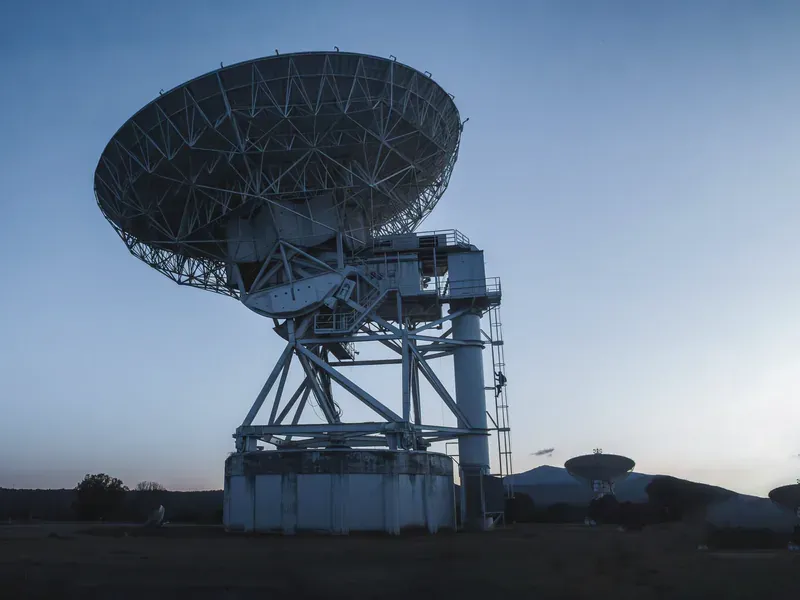
Start with a radiation analysis rather than a generic table of orbit classes. NASA’s radiation-analysis guidance separates the cumulative effects of TID and displacement damage from transient or destructive single-event effects. It also notes that commercial off-the-shelf electronics are common in small spacecraft when their susceptibility is understood and mitigated.
The component requirement should state at least:
- End-of-life TID at the device location, shielding assumption, radiation design margin, and dose rate.
- Relevant SEE limits, including single-event latch-up (SEL), upset (SEU), transient (SET), functional interrupt, and destructive events.
- Operating voltage and temperature used for the radiation evidence.
- Memory integrity requirements, error-correction behavior, watchdog recovery, and acceptable reset or outage time.
- Mission duration, powered and unpowered duty cycles, and lot-to-lot evidence requirements.
- Interfaces, throughput, analog functions, package, thermal limits, and software ecosystem.
A headline TID number does not cover embedded nonvolatile memory automatically. For example, Microchip lists the SAMRH707 at 100 krad(Si) for the device and separately identifies 20 krad(Si) for embedded NVM as a value to be confirmed. The procurement specification must identify which functions and memories the cited radiation limit covers.
Compare MCU Candidates on Published Evidence and Product Status
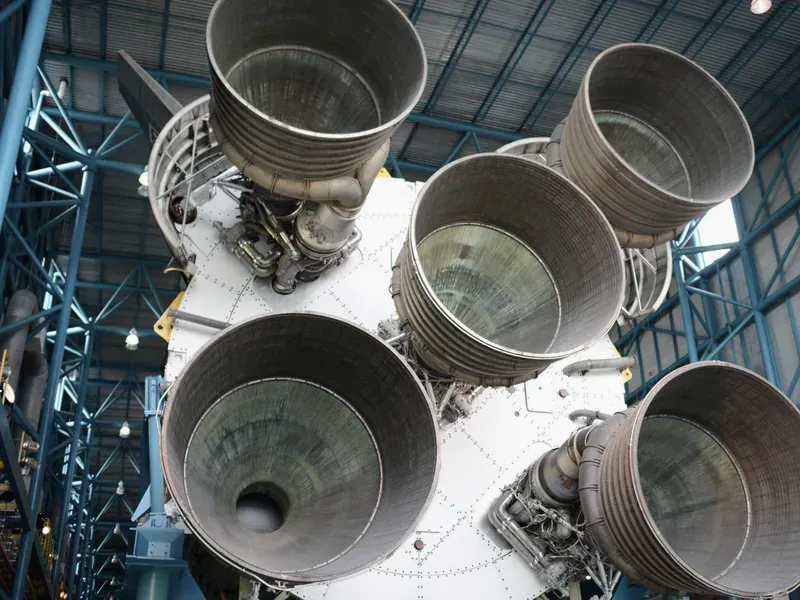
The following devices illustrate materially different sourcing choices. Values are manufacturer-published and should be checked against the latest datasheet, errata, qualification record, and radiation reports before design freeze.
| Device | Architecture and status, August 2026 | Published radiation data | Procurement significance |
|---|---|---|---|
| Microchip SAMRH707 | Arm Cortex-M7, in production | 100 krad(Si) TID; no SEL below LET 78 MeV-cm2/mg at 125 C | Integrates SpaceWire, MIL-STD-1553B, CAN FD, ADC, and DAC; confirm NVM limits and ordered qualification level |
| VORAGO VA41620 | Arm Cortex-M4, rad-hard product | Greater than 300 krad(Si) TID; SEL immunity above LET 110 MeV-cm2/mg at 125 C | External program memory is part of the architecture; confirm package and companion-memory plan |
| Frontgrade Gaisler GR716A | LEON3FT SPARC V8; flight models available | 100 krad(Si) TID; SEL threshold above LET 118 MeV-cm2/mg | Mature flight-model option with SpaceWire, 1553B, CAN, ADC, and DAC |
| Frontgrade Gaisler GR716B | LEON3FT with real-time accelerators; in development | Product information remains subject to change | Suitable for roadmap evaluation, not a drop-in replacement for a qualified production device |
This is not a universal approved-vendor list. Architecture, toolchain, boot memory, analog performance, interface IP, package, and assurance flow differ enough that cross-vendor replacement normally means hardware and software redesign plus renewed verification.
Renesas offers a substantial portfolio of radiation-hardened analog and power products, but that does not make every product in its space portfolio a microcontroller. Keep the MCU shortlist separate from supervisors, power-management ICs, memories, FPGAs, and processors so the BOM and qualification records remain unambiguous.
Evaluate TID, SEE, and System Recovery Together
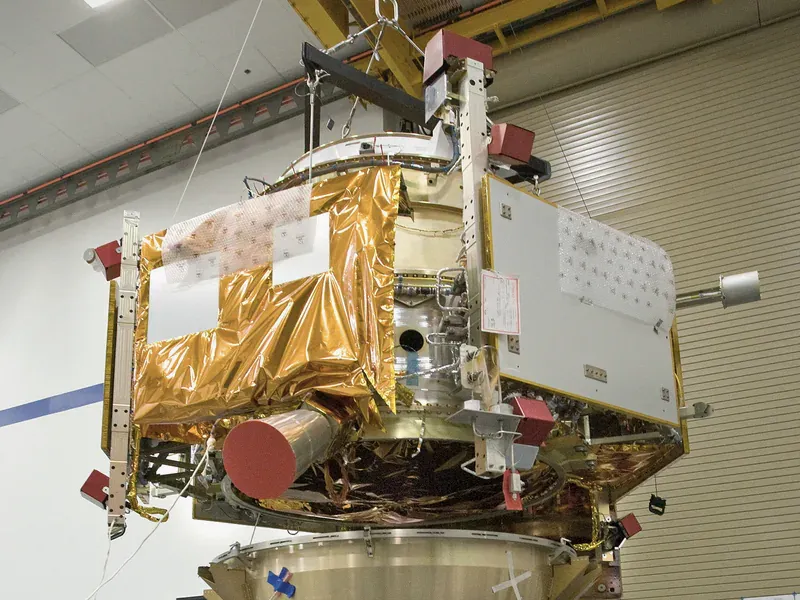
Radiation hardness is multi-dimensional. A device can have adequate TID tolerance and still be unacceptable because of latch-up, destructive events in a peripheral, excessive upset rate, or an unrecoverable failure mode in the application.
Build the selection matrix around the system consequence:
| Evidence | Question it should answer | Common procurement mistake |
|---|---|---|
| TID report | Will electrical parameters and functions remain within limits through end of life? | Quoting a device-level number without dose rate, bias, temperature, or memory scope |
| SEE report | What events occur across relevant particle species and LET, and are any destructive? | Treating “SEL immune” as proof that SEU and functional interrupts are acceptable |
| Displacement-damage data | Are affected device structures and analog functions stable for the mission fluence? | Omitting the mechanism because the MCU is digital |
| Lot or wafer acceptance data | Does production evidence apply to the ordered material? | Assuming qualification data identifies the exact lot |
| System fault analysis | Can hardware, software, and operations detect and recover from the observed effects? | Selecting solely by part-level hardness |
Use the radiation specialist’s environment model to set the test conditions and margin. Then reconcile those conditions against the manufacturer’s reports. If the evidence was collected at a different voltage, temperature, dose rate, or device revision, the engineering authority should determine whether similarity is acceptable.
Keep Qualification and Screening Terms Precise

“Space grade,” “QML,” “MIL-STD-883,” and “ESCC” are not interchangeable labels. The applicable flow depends on the ordered part number, slash-sheet or Standard Microcircuit Drawing, package, screening level, and customer program.
Before approving a line item, collect:
- The current manufacturer datasheet, errata, product-status record, and ordering information.
- The exact QML, SMD, ESCC, or manufacturer-controlled qualification evidence required by the program.
- Certificate of conformance, lot and wafer identifiers, date code, serialization where applicable, and screening data.
- Radiation reports tied to the relevant device revision and the lot-level data required by the radiation-hardness-assurance plan.
- Storage, dry-pack, ESD, bake, and handling history where package sensitivity makes them relevant.
- Approved deviations, destructive physical analysis, or additional testing requirements written into the purchase order.
MIL-STD-883 describes test methods and procedures; citing it without the applicable method, condition, acceptance criteria, and ordered flow is incomplete. Similarly, an AS6081 quality system can support counterfeit-risk controls in an independent distribution transaction, but it does not qualify a device for spaceflight or replace original manufacturer pedigree.
Our counterfeit-detection guide covers incoming verification. A flight program still needs its own parts-control and radiation-hardness-assurance process.
Determine Export Classification for the Exact Part and Transaction
Do not classify a rad-hard MCU from the phrase “space qualified.” Some space-related microelectronic circuits moved from the U.S. Munitions List to Commerce Control List entries during export-control reform, and other devices or technical data may fall under different controls.
The U.S. Bureau of Industry and Security recommends obtaining the current Export Control Classification Number from the manufacturer, checking it against the current Commerce Control List, or requesting an official classification when needed. If jurisdiction between the EAR and ITAR is uncertain, the State Department provides a Commodity Jurisdiction process.
For each transaction, compliance personnel should document:
- Exact manufacturer part number, hardware revision, software, and technical data involved.
- Jurisdiction and current classification supplied or confirmed for that item.
- Destination, consignee, end user, end use, and all intermediate parties.
- License requirement, exception or exemption analysis, and reexport or in-country transfer restrictions.
- Recordkeeping, denied-party screening, and freight instructions.
Do not describe an entire manufacturer’s “rad-tolerant line” as ITAR, EAR, or a single ECCN. Classification is part-specific and can change. Logistics providers execute the authorized shipping instructions; they do not determine jurisdiction for the exporter. Our semiconductor logistics provider guide explains what evidence to require from the transport chain.
Protect Long-Cycle Programs from Supply Discontinuity
Space and defense programs often need parts long after the initial qualification. Preserve continuity at design freeze rather than waiting for an end-of-life notice.
The sourcing plan should include:
- A product-status and change-notification owner for every critical MCU, memory, and companion device.
- Forecasts separated into engineering models, qualification units, flight units, destructive-test samples, spares, and attrition.
- Lot strategy that prevents uncontrolled mixing when radiation data or qualification is lot-sensitive.
- A retained sample and data-retention policy matched to the program lifetime.
- A pre-approved response for allocation, product change, end of life, or loss of an authorized supply path.
- A redesign trigger based on remaining qualified inventory and requalification lead time.
An independent source may bridge a shortage only when the program accepts that channel and the exact material retains the required pedigree. Require seller identity, chain of custody, lot photos, packaging records, and the test package specified by the design authority. If pedigree is incomplete, treat the material as a new risk requiring formal disposition, not as equivalent qualified stock.
The correct sourcing decision is therefore not “rad-tolerant for LEO and rad-hard for GEO.” It is the device and assurance flow that meet the modeled environment, failure budget, interfaces, software, qualification basis, export requirements, and program lifetime with evidence that applies to the exact part being purchased.
Frequently Asked Questions (FAQ)
Can an automotive MCU be used in a low-Earth-orbit spacecraft?
Possibly, but AEC-Q100 qualification does not establish radiation performance. A program considering a commercial or automotive MCU needs mission-specific TID, displacement-damage, and single-event-effects analysis, supported by applicable test data and system-level mitigation.
Does a 100 krad(Si) TID rating make an MCU suitable for every orbit?
No. TID is only one dimension. Suitability also depends on mission duration, shielding, dose margin, single-event latch-up and upset behavior, displacement damage, operating conditions, lot variability, and the system response to faults.
Are all rad-hard microcontrollers controlled under ITAR?
No blanket classification is reliable. Jurisdiction and classification depend on the exact part and its technical characteristics. Obtain the current classification from the manufacturer and have export-compliance personnel evaluate destination, end user, end use, reexport, and licensing requirements.
Can an independent distributor provide a flight-qualified MCU?
An independent channel can supply the specified part, but it cannot create or extend the manufacturer's qualification. The buyer must preserve lot identity, pedigree, storage history, screening and radiation records, and any program approval required for that exact device and lot.