Table of Contents
In the wake of the pandemic-era semiconductor shortages, governments worldwide initiated unprecedented subsidies—most notably the U.S. CHIPS Act and the European Chips Act—to reshore and expand domestic semiconductor manufacturing. However, as we navigate through 2026, the reality of “fab economics” has set in. Building a modern semiconductor fabrication plant is not merely a matter of capital; it is a battle against time, complex supply chains, and specialized equipment lead times.
At SupplyICs, we track the upstream metrics of semiconductor manufacturing because they are the leading indicators of downstream component availability. If the foundries cannot secure the equipment to build the chips, our OEM clients cannot secure the components to build their products.
The Reality of Fab Construction Timelines
The theoretical timeline to construct a greenfield fab is three to four years. In 2026, the practical timeline has stretched considerably due to localized challenges:
- Labor Shortages: Constructing a cleanroom requires highly specialized tradespeople—pipefitters who understand ultra-pure water systems, and electricians who can handle massive industrial loads with zero tolerance for failure. A severe shortage of this specialized labor in North America and Europe has delayed several flagship fab projects.
- Environmental Permitting: Securing the permits for the massive water consumption and chemical disposal required by modern fabs remains a multi-year bureaucratic hurdle.
Semiconductor Equipment Lead Times: The Ultimate Bottleneck
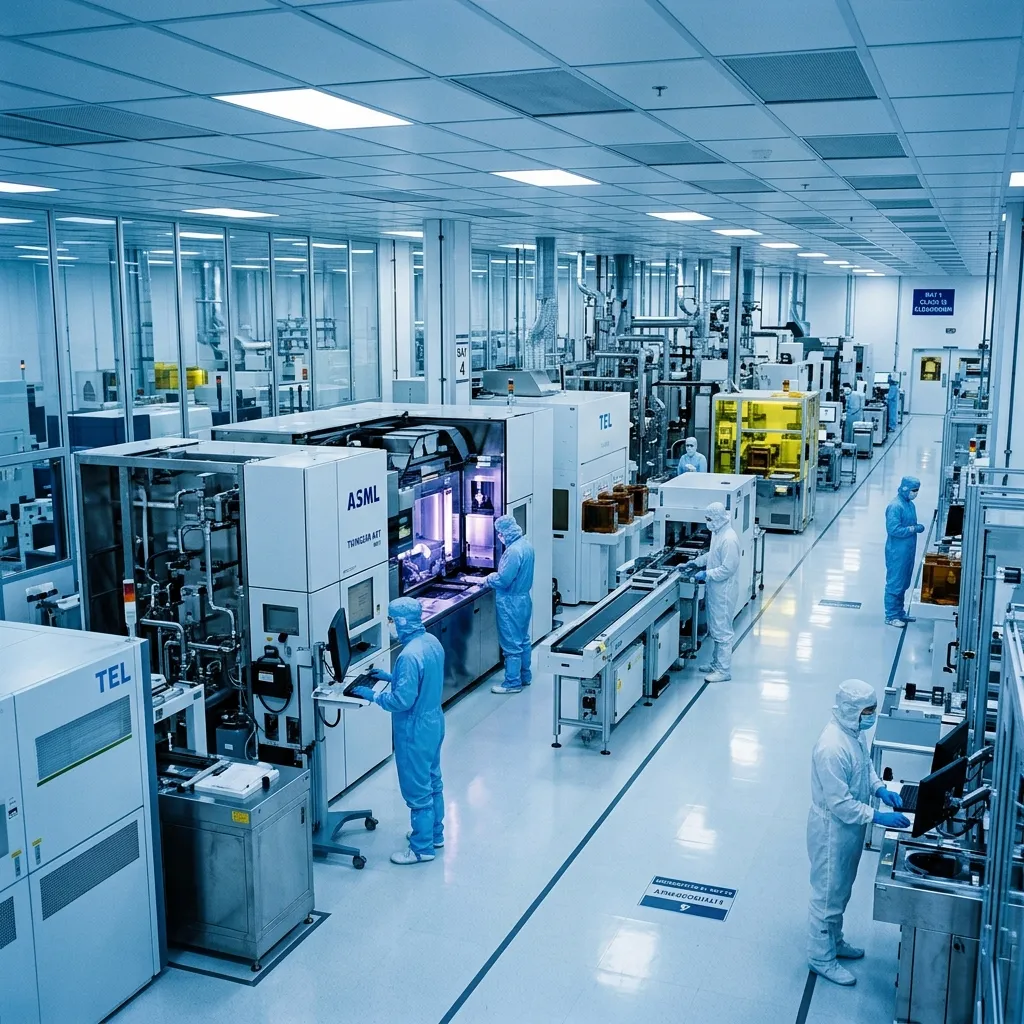
Even when the concrete is poured and the cleanrooms are sealed, the fab cannot produce a single silicon wafer without highly specialized manufacturing equipment. The lead times for this equipment represent the ultimate bottleneck in the global supply chain.
Extreme Ultraviolet (EUV) Lithography
The production of anything smaller than 7nm relies almost entirely on EUV lithography machines produced by a single company: ASML. In 2026, the backlog for high-NA EUV systems extends well over 18 months. Foundries must place orders years before a fab is structurally complete.
Metrology and Deposition Equipment
It isn’t just cutting-edge lithography. Companies like Applied Materials, Lam Research, and KLA provide essential deposition, etching, and metrology equipment for mature nodes (28nm to 90nm). Lead times for these systems, critical for automotive and industrial power management ICs (PMICs), remain elevated at 9 to 12 months.
Impact on Component Sourcing
How do these upstream delays affect everyday electronic component procurement?
- Prolonged Life of Mature Nodes: Because building new fabs for mature nodes is economically unviable with current equipment costs, IDMs (Integrated Device Manufacturers) are squeezing maximum output from fully depreciated fabs. This leaves little room for surging demand in sectors like automotive, keeping specific MCUs and PMICs in a state of perpetual constraint.
- Geographic Concentration Risk: Because reshoring efforts are moving slower than anticipated due to construction delays, the global supply chain remains heavily reliant on established Asian foundries. Any disruption in that region will still cause immediate global shocks.
SupplyICs Sourcing Strategy
Relying solely on franchised distribution lead times in this environment is a high-risk strategy. By the time a franchise distributor receives an allocation cut from the manufacturer, it is too late for the end buyer to react.
Our strategy at SupplyICs is to monitor these macroeconomic foundry trends and aggressively secure buffer inventory of highly sensitive, single-source components on the open market before allocation hits.
Protect your production lines from macro-level foundry delays. Contact SupplyICs for strategic buffer inventory planning and immediate sourcing of allocated components.
Frequently Asked Questions (FAQ)
What are the main sourcing challenges for this semiconductor family in 2026?
Semiconductor fab equipment lead times for lithography and advanced packaging tools remain tight in 2026. Sourcing requires monitoring ASML and Applie...