
Table of Contents
- What Are the Concentrated Risks in the 2026 Semiconductor Supply Chain?
- Taiwan: The Single Point of Failure
- China: Export Controls and Rare Earth Dependency
- Southeast Asia: Assembly and Test Concentration
- What a Diversified Electronics Supply Chain Looks Like in Practice
- Layer 1: Component-Level Diversification
- Layer 2: Geographic Diversification
- Layer 3: Logistics Diversification
- What Does Diversification Cost—and What Is the ROI?
- The CHIPS Act Timeline Integration: What Procurement Teams Should Be Tracking
- The Independent Distribution Channel as a Strategic Diversification Tool
In January 2024, a 7.4-magnitude earthquake struck Taiwan’s eastern coast. TSMC’s fabs in Hsinchu and Tainan—which produce roughly 90% of the world’s advanced logic chips—reported some wafer-in-process damage but resumed operations within 48 hours. The global semiconductor supply chain exhaled.
The near-miss concentrated minds. If that earthquake had been centered 100 kilometers closer to Hsinchu Science Park, the damage would not have been measured in hours of downtime. It would have been measured in months of wafer output loss, with cascading effects across every industry that depends on advanced silicon—which in 2026 means every industry.
This is not alarmism. It is the rational conclusion from a supply chain map that shows the world’s most critical manufacturing input concentrated in a geographically compact, seismically active, geopolitically contested region. The question for procurement teams is not whether to diversify, but how to diversify in a way that meaningfully reduces risk without imposing costs that make your products uncompetitive.
What Are the Concentrated Risks in the 2026 Semiconductor Supply Chain?
Taiwan: The Single Point of Failure
Taiwan’s semiconductor manufacturing dominance is the most concentrated supply chain risk in the global economy:
- TSMC produces approximately 90% of the world’s advanced logic chips (sub-7nm process nodes)
- TSMC’s advanced packaging (CoWoS, InFO, SoIC) is even more concentrated, with roughly 95% market share for AI accelerator packaging
- Taiwan-based OSATs (ASE, SPIL, Powertech) handle over 50% of global semiconductor assembly and test
The CHIPS Act reshoring effort is making progress—U.S. advanced logic manufacturing share has risen from approximately 12% (2020) to roughly 22% (2026), per SIA estimates—but the majority of advanced silicon still transits Taiwan. The U.S. fabs now in volume production (TSMC Arizona Phase 1, Intel Ohio Module 1, Samsung Taylor Fab 1) have a combined capacity of approximately 69,000 wpm—a fraction of TSMC Taiwan’s 1,000,000+ wpm capacity.
China: Export Controls and Rare Earth Dependency
China processes approximately 90% of the world’s rare earth elements used in semiconductor manufacturing (CMP slurries, sputtering targets, dopants). While rare earth processing is geographically diversifying (Lynas in Australia/Malaysia, MP Materials in California), the supply chain remains heavily concentrated for the high-purity grades required in semiconductor manufacturing.
Additionally, Chinese export controls on gallium and germanium (announced 2023, expanded 2024) affect compound semiconductor production for RF and optoelectronic devices. These materials are not irreplaceable—alternative sources exist in Australia, Canada, and the Democratic Republic of Congo—but qualifying alternative material sources adds 6–12 months to semiconductor production timelines.
Southeast Asia: Assembly and Test Concentration
Malaysia (Penang, Kulim), Vietnam (Hanoi, Ho Chi Minh City), and the Philippines (Laguna, Cavite) host a large share of the world’s semiconductor assembly, test, and packaging facilities. A regional disruption—flooding during monsoon season, which has historically affected hard disk drive and semiconductor production in Thailand and Malaysia—could simultaneously impact multiple suppliers’ assembly and test output.
What a Diversified Electronics Supply Chain Looks Like in Practice
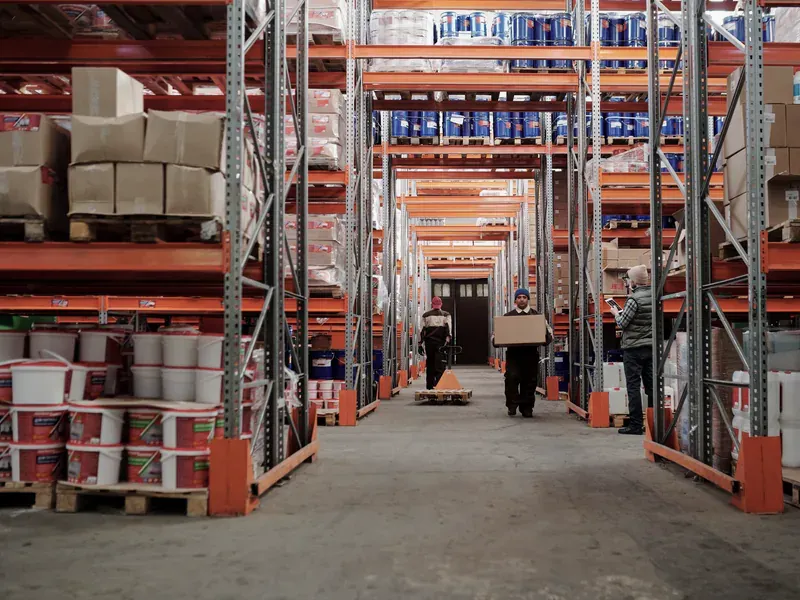
Diversification operates at three layers:
Layer 1: Component-Level Diversification
Goal: No single component on the BOM should have only one qualified supply source.
Implementation: For every critical component (defined as: single-source, lead time > 16 weeks, or representing > 5% of BOM cost), maintain:
- One franchise distribution source (OCM-authorized, lowest counterfeit risk, highest allocation priority)
- One qualified independent distribution source (AS6081-aligned, broader inventory access, allocation overflow)
- For the top 10 highest-risk components, a documented alternative part number with completed qualification
Layer 2: Geographic Diversification
Goal: No single geography should account for > 50% of the supply for any critical component family.
Implementation: For each component family (MCUs, analog ICs, power discretes, passives, connectors):
- Map the fabrication and assembly locations for each supplier’s parts
- Identify components where a single geography (Taiwan, China, South Korea) provides > 50% of supply
- Prioritize qualification of alternative sources in different geographies for these components
Practical progress metrics: Track the percentage of BOM components (by cost, not by count) that have qualified supply sources in at least two distinct geographic regions. Target: 60%+ by end of 2026, 80%+ by end of 2027.
Layer 3: Logistics Diversification
Goal: No single shipping route should account for > 50% of inbound component logistics.
Implementation:
- Maintain at least two independent freight forwarders with different primary routes
- Pre-qualify air freight alternatives for ocean freight routes vulnerable to geopolitical chokepoints (Strait of Malacca, South China Sea, Red Sea/Suez Canal)
- Establish regional buffer inventory (Americas, EMEA, APAC) for high-volume, high-criticality components to decouple production from shipping lead times
What Does Diversification Cost—and What Is the ROI?
Supply chain diversification is not free. The question is whether the cost of diversification exceeds the expected cost of not diversifying.
| Diversification Activity | Typical Cost | Risk Mitigated | ROI Rationale |
|---|---|---|---|
| Qualify second-source MCU alternative | $50,000–150,000 | Single-source supply disruption | A single 4-week production halt costs $500,000–5,000,000+; ROI is 10–100x |
| Regional buffer inventory (3 months) | 25% of annual component spend × 0.25 | Logistics disruption, regional crisis | Avoids 8–12 week production gap; typical payback < 18 months |
| Qualify independent distributor | $10,000–30,000 (audit + trial order) | Allocation shortfall, EOL access | Provides supply continuity for 5–15% of components that franchise cannot fulfill |
| Multi-geography fab source qualification | $100,000–300,000 per component family | Geopolitical disruption of primary fab region | Single-event protection with annual probability of 2–5% and catastrophic impact |
| Dual freight forwarder qualification | $5,000–15,000 | Logistics route disruption | Red Sea/Suez disruptions in 2023–2024 demonstrated 4–6 week rerouting delays |
For most electronics OEMs with annual revenues above $50 million, the cost of comprehensive supply chain diversification is 0.5–1.5% of revenue—comparable to a modest insurance premium against risks with potential losses of 10–50% of annual revenue.
The CHIPS Act Timeline Integration: What Procurement Teams Should Be Tracking
The CHIPS Act and companion international legislation (EU Chips Act, Japan’s semiconductor subsidy program, India’s semiconductor incentive scheme) are physically reshaping the semiconductor supply chain. For procurement teams, the key timelines to track:
| Capacity Addition | Location | Process | Target Production | Impact on Procurement |
|---|---|---|---|---|
| TSMC Arizona Phase 2 | Phoenix, AZ, USA | 3nm (N3) | H2 2027 | First non-Taiwan source for leading-edge logic; will reduce but not eliminate Taiwan dependency |
| Intel Ohio Module 2 | New Albany, OH, USA | 18A → 14A | H2 2027 | Adds US-based advanced logic capacity; Intel Foundry Services open to external customers |
| TI Sherman RFAB3 | Sherman, TX, USA | 28nm–130nm | H2 2026 | Critical mature-node capacity; directly addresses analog and embedded processing supply constraints |
| Samsung Taylor Fab 2 | Taylor, TX, USA | 2nm GAA | 2028 | Adds US-based leading-edge logic; strengthens Samsung Foundry as TSMC alternative |
| Micron Boise Fab 4 | Boise, ID, USA | DRAM | H2 2027 | First US DRAM production in decades; 40% of Micron’s DRAM targeted for US production |
| TSMC Kumamoto Fab 2 | Kumamoto, Japan | 6nm/7nm | 2027 | Japan-based advanced logic; diversifies Asian supply beyond Taiwan |
| Tata/PSMC Dholera | Gujarat, India | 28nm–110nm | Mid-2028 | First Indian commercial fab; initially mature nodes, diversifying Asian semiconductor geography |
The procurement implication: between now and 2028, the semiconductor supply chain is in a transition period where new capacity is being built but not yet operational. During this period, supply chain diversification relies more on independent distribution, buffer inventory, and alternative sourcing strategies than on new fab capacity. After 2028, geographic diversification options expand significantly as CHIPS Act-funded fabs reach volume production.
The Independent Distribution Channel as a Strategic Diversification Tool
Independent distribution is the most underutilized diversification tool in semiconductor procurement. When properly qualified to AS6081 standards, independent distributors provide:
- Geographic inventory diversification: Warehouses in the US, Europe, and Asia that can route supply around regional disruptions
- Allocation overflow: Parts that are on allocation through franchise channels are often available through independent channels
- EOL supply continuity: Parts that franchise distributors have discontinued remain available through independent channels for years after LTB windows close
- Market intelligence: Independent distributors see cross-OEM buying patterns that provide early warning of emerging shortages
The key: establish and qualify the independent distribution relationship before you need it. Auditing a new distributor during a supply crisis adds weeks of delay—exactly when you cannot afford it.
Building supply chain diversification into your electronics procurement? SupplyICs provides multi-region sourcing with AS6081-aligned quality controls across the global semiconductor supply chain. Contact our team for a supply chain diversification assessment, or upload your BOM for a geographic risk analysis.
Frequently Asked Questions (FAQ)
What does supply chain diversification actually mean for electronics procurement in 2026?
Supply chain diversification for electronics procurement means establishing at least two independent, qualified sources for every critical component on your BOM—where 'independent' means the sources do not share a common fab, common geography, or common logistics path. The diversification must be operational, not theoretical: a qualified second source with documented inspection procedures, approved supplier status, and an active supply agreement. For electronics OEMs in 2026, diversification should cover three layers: (1) Component-level: at least one franchise and one qualified independent distributor for each critical part; (2) Geographic-level: at least one supply source outside Taiwan/China for each critical part family; and (3) Logistics-level: at least two independent shipping routes from supplier to factory. The goal is not to eliminate risk—that is impossible—but to ensure that no single geopolitical event, natural disaster, or trade policy change can halt production.
How do I implement a China+1 or Taiwan+1 sourcing strategy for semiconductors?
A Taiwan+1 semiconductor sourcing strategy identifies alternative fabrication or assembly sources for components currently manufactured exclusively or primarily in Taiwan. The implementation path: (1) Map your BOM by fab location—request country-of-origin data from suppliers for each part number; (2) Identify parts where Taiwan is the sole fabrication location; (3) For these parts, evaluate: (a) US-based alternatives from TI (Sherman, TX), Intel (Arizona, Ohio), or GlobalFoundries (New York); (b) Europe-based alternatives from STMicroelectronics, Infineon, or NXP's European fabs; (c) Japan-based alternatives from Renesas or Rohm; (d) Singapore/Malaysia-based assembly and test alternatives even if wafer fab remains in Taiwan. Implementation typically takes 12–18 months per part family and costs $50,000–200,000 in qualification expenses per component category. Prioritize the 20% of parts that account for 80% of revenue impact if supply is disrupted.
What role does independent distribution play in supply chain diversification?
Independent distribution is the third pillar of supply chain diversification, alongside franchise distribution and direct supplier relationships. An AS6081-certified independent distributor provides: (1) access to genuine, traceable parts from global inventory sources that are not available through franchise allocation; (2) geographic diversification—a distributor with warehouses in the US, Europe, and Asia can route supply around regional disruptions; (3) EOL and shortage buffer—independent distributors maintain inventory of parts that franchise distributors have already discontinued; and (4) market intelligence—independent distributors see buying patterns across hundreds of OEMs and can provide early warning of emerging shortages. The key procurement requirement: the independent distributor must be qualified to the same counterfeit avoidance standards (AS6081 process, AS6171 testing) as your franchise distributors, and you should maintain an active relationship before you need it—qualifying an independent distributor during a crisis adds 4–6 weeks of delay that defeats the purpose of diversification.