Table of Contents
- The Regulatory Landscape in 2026
- The Challenge of Component Obsolescence (EOL)
- The Three Pillars of Medical-Grade Sourcing
- 1. Unbroken Traceability
- 2. ISO 13485 Quality Management Systems
- 3. Advanced Anti-Counterfeit Testing
- Case Study: Sourcing EOL FPGAs for MRI Scanners
- Conclusion: Partnering for Patient Safety
The medical device sector operates under the highest stakes in the electronics industry. A failing component in a consumer gadget causes frustration; a failing component in a ventilator, pacemaker, or diagnostic imaging machine costs lives.
As global supply chains continue to evolve in 2026, sourcing components for Class II and Class III medical devices demands an uncompromising approach to Quality Assurance (QA). This article outlines the definitive strategies for procuring medical-grade semiconductors while maintaining bulletproof compliance.
The Regulatory Landscape in 2026
The regulatory net has tightened significantly. The European Union’s MDR (Medical Device Regulation) is now fully enforced, and the U.S. FDA has increased its scrutiny on supply chain resilience and cybersecurity for connected medical devices (IoMT - Internet of Medical Things).
Procurement teams must ensure that every active, passive, and electromechanical component on the BOM meets strict lifecycle and traceability requirements.
The Challenge of Component Obsolescence (EOL)
Medical devices have incredibly long product lifecycles—often 10 to 15 years—due to the prohibitive cost and time required for regulatory recertification. Conversely, the commercial semiconductor market moves rapidly, with consumer-grade ICs often facing End-of-Life (EOL) within 3 to 5 years.
This lifecycle mismatch forces medical device OEMs to navigate the independent distribution market to source obsolete components. For any electronics manufacturer end of life or last time buy or pcn semiconductor component 2026 represents a critical failure point where the risk of counterfeiting reaches its peak.
The Three Pillars of Medical-Grade Sourcing
To safely procure components, especially hard-to-find or EOL parts, SupplyICs adheres to a framework built specifically for high-reliability sectors.
1. Unbroken Traceability
Traceability is the bedrock of medical device compliance. A reputable distributor must be able to provide the “paper trail”—Certificate of Conformance (CoC), date codes, and lot numbers—proving the chain of custody from the Original Component Manufacturer (OCM) to the final delivery. Without traceability, root cause analysis in the event of a device recall becomes impossible.
2. ISO 13485 Quality Management Systems
While ISO 9001 is the standard for general business, ISO 13485 is the specialized standard for the design and manufacture of medical devices. When selecting a supply chain partner or distributor, verifying their adherence to ISO 13485 principles ensures they understand the specific documentation, risk management, and environmental controls required for healthcare electronics.
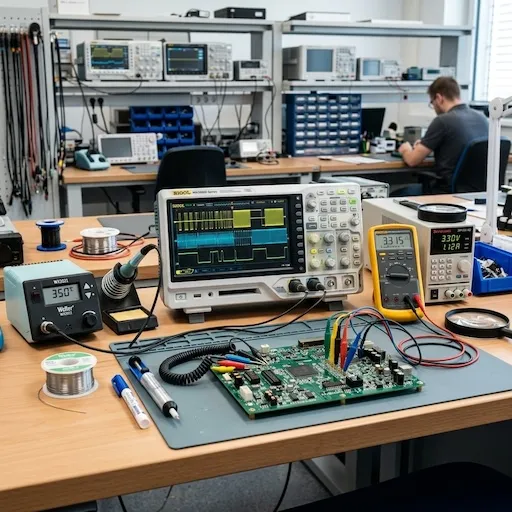
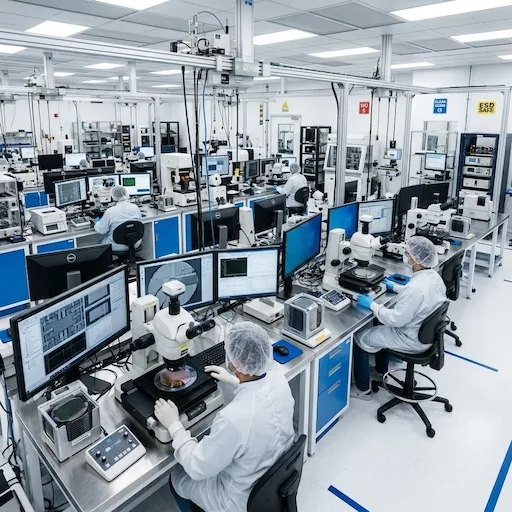 Fig 1: Advanced quality assurance requires controlled environments and highly trained inspectors to ensure zero defects in medical supply chains.
3. Advanced Anti-Counterfeit Testing
Visual inspection under a microscope is completely inadequate against 2026’s sophisticated counterfeiting rings. Modern component authenticity verification requires sourcing from the open market with mandated, rigorous, and documented testing protocols aligned with standards like IDEA-STD-1010.
At SupplyICs, our QA flow for high-reliability components includes:
- X-Ray Analysis: To inspect wire bonds, lead frames, and internal die structures against known-good databases.
- Decapsulation (De-cap): Using chemical etching to expose the silicon die, allowing engineers to verify the original manufacturer’s logo and part number etched at the microscopic level.
- Solderability Testing: Ensuring that aged EOL components will reliably bond during the OEM’s PCB assembly process.
- Electrical Testing: Verifying specific parametric values against the original datasheet.
Case Study: Sourcing EOL FPGAs for MRI Scanners
The Scenario: A major medical imaging OEM received a Last Time Buy (LTB) notification for a critical Intel (Altera) Cyclone FPGA used in their legacy MRI machines. The OEM missed the LTB window, facing a potential halt in production for a highly profitable product line.
The Solution: Executing advanced procurement strategies reliable supply semiconductors fpga embedded solutions, the OEM engaged SupplyICs. We utilized our global network to locate factory-sealed inventory sitting in a surplus warehouse in Europe.
The Compliance Execution:
- We secured the inventory and immediately placed it in quarantine.
- We conducted full X-ray and decapsulation analysis, confirming the die authenticity against Intel specifications.
- We performed solderability testing to ensure the 4-year-old date codes remained viable.
- We provided a comprehensive, 30-page test report alongside the components, giving the OEM’s quality department the exact documentation needed for their FDA compliance files.
Conclusion: Partnering for Patient Safety
In the medical device industry, procurement is not just about negotiating price and delivery—it is an extension of patient safety. By insisting on absolute traceability, demanding ISO-aligned processes, and relying on advanced laboratory testing for obsolete parts, OEMs can insulate themselves from supply chain shocks while maintaining total regulatory compliance.
Are you struggling with component obsolescence or EOL notifications for your medical device BOM? SupplyICs provides fully tested, traceable sourcing solutions for the healthcare industry. Contact our Quality Assurance team today to discuss your compliance requirements.
Frequently Asked Questions (FAQ)
What are the main sourcing challenges for this semiconductor family in 2026?
Sourcing B2B medical electronic components in 2026 requires strict ISO 13485 compliance and original manufacturer traceability. Procurement must imple...