Table of Contents
- What Are the Four Tiers of Component Replaceability?
- Which Tier Should You Target for Your Critical BOM Lines?
- How Do You Execute a Proper Parametric Cross-Reference Search?
- What Is the Correct Filter Order for Parametric Search?
- Which Manufacturer Cross-Reference Paths Work Best in 2026?
- When Should You Trust an Independent Distributor’s Cross-Reference Recommendation?
- How Much Does Getting Cross-Referencing Wrong Actually Cost?
In February 2026, an Italian building automation company watched its primary STMicroelectronics STM32F103RCT6 microcontroller—the brain of its flagship HVAC controller—go to zero stock across all authorized distributors in Europe. The PDN had been issued eleven months earlier. The engineering team had flagged it. The procurement team had calculated the LTB quantity. But the LTB order was placed three weeks late, and 4,800 of the 12,000 units needed were simply not available at any price through authorized channels.
The team then spent six weeks evaluating alternatives. Three weeks searching cross-reference databases. Two weeks ordering samples. A week of electrical testing. By the time a GigaDevice GD32F103RCT6 was validated as a P2P drop-in, the production line had been down for nine days. The cost of the replacement part: $3.20. The cost of the downtime: ~$185,000.
This article is about making sure that math never applies to your BOM.
What Are the Four Tiers of Component Replaceability?
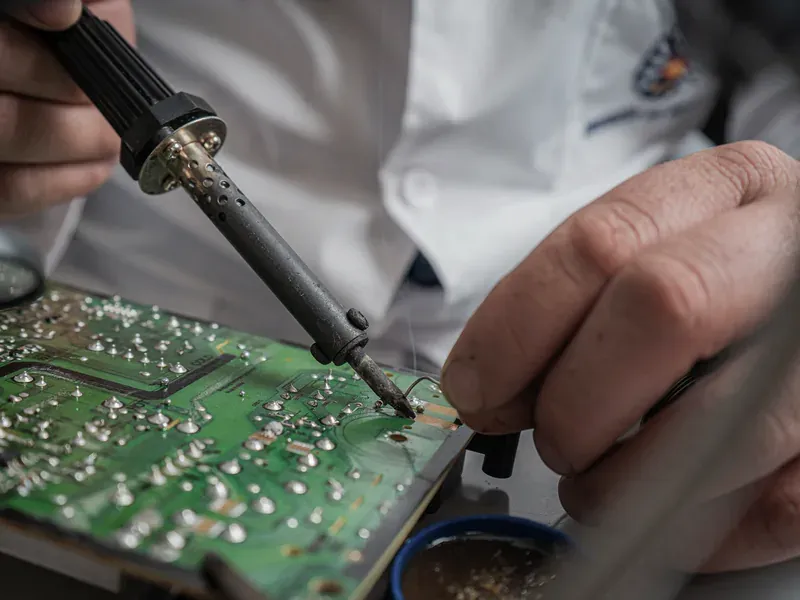
Not all “alternatives” are equal. Treating a functional alternative as a drop-in replacement is how teams end up with six-week delays and unexpected PCB respins. Understanding the four compatibility tiers is the foundation of effective cross-reference work.
| Compatibility Tier | Description | Qualification Time | Example |
|---|---|---|---|
| Tier 1: True P2P Drop-In | Same package, same pinout, same electrical specs within tolerance | 8-16 weeks (commercial/industrial) | STM32F103RET6 → GD32F103RET6 (same LQFP-64, Cortex-M3) |
| Tier 2: Footprint-Compatible | Same PCB pads, different firmware/peripherals/toolchain | 16-32 weeks | NXP S32K144 → Infineon TC233L (both LQFP-100, different toolchains) |
| Tier 3: Functional Equivalent, Different Footprint | Same system function, requires PCB layout change | 26-52 weeks | Infineon TLE9879QXA40 (VQFN-48) → ST SPC560B54L3 (LQFP-100) |
| Tier 4: Architectural Alternative | Different architecture achieving same system function | 26-52+ weeks + board redesign | Discrete MCU + external PHY → integrated Espressif ESP32-S3 module |
Which Tier Should You Target for Your Critical BOM Lines?
For components that are single-sourced and represent a line-down risk, aim for at least a Tier 2 alternate. For components in regulated industries (medical, aerospace, automotive), a Tier 1 alternate with full electrical and reliability validation is usually mandatory unless you are prepared to recertify the end product—a multi-year, multi-million-dollar exercise.
How Do You Execute a Proper Parametric Cross-Reference Search?
The most common mistake in cross-referencing: searching for “similar parts” by description rather than by systematic parametric filtering. The right process is sequential and unforgiving.
What Is the Correct Filter Order for Parametric Search?
| Step | Filter | Why This Order | Common Mistake |
|---|---|---|---|
| 1 | Package / Case | Guarantees the part physically fits your PCB. Eliminates ~70% of parametric matches immediately. | Skipping to electrical specs first — you will find electrically compatible parts in the wrong package |
| 2 | Pin Count | Within package family, pin count determines whether the part drops into the same footprint. | Assuming same package = same pin count |
| 3 | Core Electrical Specs | Operating voltage range, max frequency, memory size, ADC resolution. Match the specs your design actually uses, not the headline specs. | Matching only headline frequency while ignoring peripheral differences that break firmware |
| 4 | Temperature Range | Industrial (-40 to +85°C) vs. automotive (-40 to +125°C) vs. commercial (0 to +70°C). Non-negotiable for regulated applications. | Accepting a commercial-grade part for an industrial application |
| 5 | Stock Status | Check last. A perfect parametric match with zero global inventory is not a solution. | Checking stock first and being misled by "similar" parts that don't actually fit |
Which Manufacturer Cross-Reference Paths Work Best in 2026?
Based on real-world substitution data from independent distributor sourcing in H1 2026:
| Original Manufacturer | Common Alternate Sources | Typical Compatibility Tier | Notes |
|---|---|---|---|
| STMicroelectronics STM32 | GigaDevice GD32, NXP LPC | Tier 1-2 | GD32 offers near-identical Cortex-M3/M4 mapping |
| Texas Instruments Analog | Analog Devices, ON Semiconductor | Tier 2-3 | Package standardization is lower for analog — expect some layout changes |
| Microchip PIC/AVR | ST STM8, NXP LPC800 | Tier 3 | Architectural migration from 8-bit to 32-bit |
| Infineon Power | ON Semiconductor, ST | Tier 2-3 | Gate driver and MOSFET compatibility requires careful validation |
| NXP i.MX | TI Sitara, Renesas RZ | Tier 3 | Application processor migration is architecturally heavy |
When Should You Trust an Independent Distributor’s Cross-Reference Recommendation?
Independent distributors that maintain engineering teams with parametric analysis capability can provide cross-reference recommendations that authorized distributors often cannot—precisely because independent distributors aggregate supply data across multiple manufacturers and have visibility into which substitutions are actually working in the field.
A credible cross-reference recommendation from an independent distributor should include:
- Side-by-side parametric comparison of the original and proposed alternate, with discrepancies highlighted
- Package dimension verification confirming the alternate fits the same PCB pads
- Known firmware/software impact assessment — register map differences, peripheral behavior changes, toolchain compatibility
- Real-world substitution evidence — has this specific cross been validated and deployed in production by other customers?
At SupplyICs, our engineering team provides parametric cross-reference support for EOL and shortage-constrained parts across 256+ manufacturers. If you are staring at a PDN and need to identify alternatives quickly, submit your BOM for a cross-reference analysis.
How Much Does Getting Cross-Referencing Wrong Actually Cost?
The cost of a bad cross-reference decision compounds across three dimensions:
| Cost Category | Typical Range | What Drives It |
|---|---|---|
| Engineering qualification time | $15,000 – $75,000 | Engineer-hours for electrical validation, firmware porting, reliability testing |
| Production downtime | $35,000 – $380,000+ per day | Line-down cost for mid-tier manufacturer; varies by industry |
| Board redesign + recertification | $50,000 – $500,000+ | PCB respin cost, regulatory recertification (FCC, CE, FDA, etc.) |
The organizations that handle this best maintain a “pre-qualified alternate list” for every critical-path BOM line. When the PDN arrives, they do not start searching. They activate the alternate they already validated. That is the difference between a clean transition and a nine-day line-down.
Frequently Asked Questions (FAQ)
What is a pin-to-pin (P2P) compatible replacement?
A pin-to-pin compatible replacement is an alternative component that shares the same package footprint, pinout, and core electrical specifications as the original part, allowing it to be soldered onto the same PCB pads without any layout changes. True P2P drop-in parts require minimal to no firmware modification. Footprint-compatible alternatives fit the same PCB pads but may require firmware or peripheral configuration changes.
How do I find cross-reference parts for an EOL component?
Use authorized distributor parametric search tools and filter in this priority order: (1) package/case — guarantees physical fit, (2) core electrical specs — operating voltage, frequency, memory size, (3) pin count, (4) in-stock status. Cross-reference databases from manufacturers like NTE and Nexperia provide starting points, but always verify electrical specs against the original datasheet. Independent distributors can also provide engineer-verified cross-reference recommendations for legacy parts.
How long does it take to qualify an alternative component?
For commercial/industrial applications, a true P2P drop-in takes 8-16 weeks to qualify. Footprint-compatible alternatives with firmware changes take 16-32 weeks. Full board redesigns with architectural changes take 26-52 weeks minimum. Starting qualification before the EOL notice arrives is the single biggest factor in reducing downtime.