Table of Contents
The semiconductor industry has never existed in a vacuum, but by 2026, geopolitics has fundamentally rewritten the rules of global component procurement. The ongoing technological decoupling between major economic blocs has transformed the supply chain from a purely economic mechanism into a strategic geopolitical asset.
At the center of this tension are strict export controls on advanced semiconductor manufacturing equipment and the ambitious efforts of foundries like SMIC (Semiconductor Manufacturing International Corporation) to achieve self-sufficiency in cutting-edge nodes.
The Reality of SMIC’s N+3 and Advanced Nodes
Following heavy restrictions on accessing extreme ultraviolet (EUV) lithography systems from ASML, the prevailing assumption was that Chinese foundries would be permanently capped at mature nodes (14nm and above). However, SMIC has demonstrated the ability to produce 7nm-class and even 5nm-class (often referred to internally via their N+x nomenclature) silicon using multi-patterning techniques on deep ultraviolet (DUV) immersion lithography machines.
While the technical achievement is undeniable, procurement teams must look past the headlines and evaluate the fundamental metrics of mass production: Yield Rates and Economic Viability.
The Multi-Patterning Penalty
Pushing DUV equipment beyond its intended limits requires double, triple, or even quadruple patterning. Every additional pass significantly increases the chance of introducing a fatal defect into the silicon crystal.
Our industry analysis suggests that while SMIC can produce advanced logic chips for highly subsidized domestic projects, the commercial yield rates remain substantially lower than those achieved by TSMC or Samsung using EUV. For commercial OEMs sourcing consumer or industrial electronics, this means these advanced nodes are not yet a viable, cost-effective alternative on the global market.
Expanding Export Controls and Mature Nodes
While media attention focuses on sub-5nm AI logic chips, the regulatory landscape in 2026 is aggressively expanding into “legacy” or mature nodes (28nm and above). These mature nodes power the vast majority of automotive, medical, and industrial devices.
As governments scrutinize the concentration of mature node capacity, we are seeing increased friction in cross-border component trade. Compliance requirements have skyrocketed. Sourcing a seemingly innocuous power management IC (PMIC) or network controller now requires rigorous end-user verification to ensure compliance with overlapping international trade restrictions.
Mitigating Geopolitical Supply Chain Risk
For OEM procurement teams, hoping for geopolitical stability is not a strategy. The risk of sudden embargoes, retaliatory tariffs, or sudden allocation cuts due to localized compliance issues is higher in 2026 than at any point in the last two decades.
At SupplyICs, we advise a proactive, multi-layered approach to risk mitigation:
- Geographic Diversification of the BOM: If your Bill of Materials relies heavily on single-sourced components manufactured exclusively in high-risk regions, immediate re-engineering for dual-sourcing is mandatory.
- Rigorous Compliance Auditing: We maintain strict adherence to all global export control lists. Our clients rely on us to ensure that the components we source—whether from franchised lines or the open market—are fully compliant with current international trade laws, protecting them from downstream liability.
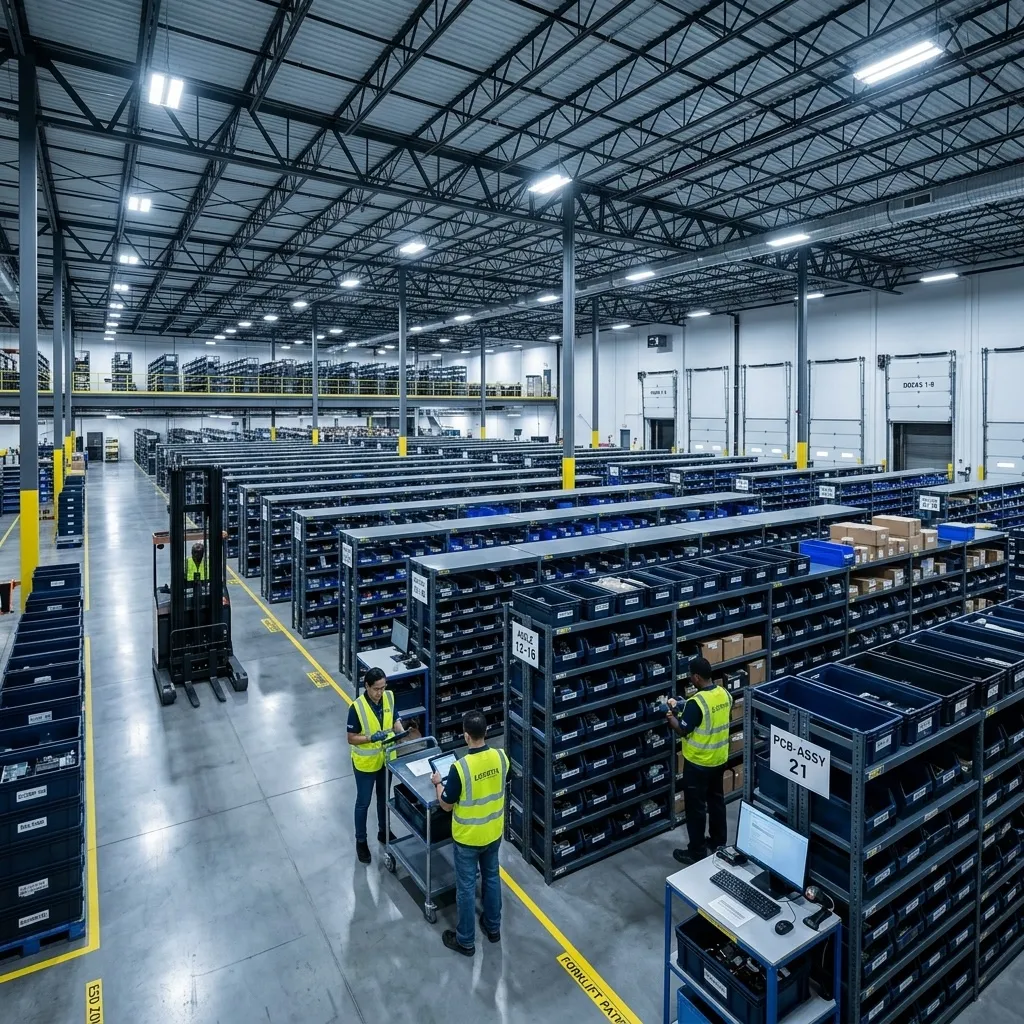
- Strategic Buffer Inventory: Just-in-Time (JIT) manufacturing is highly vulnerable to geopolitical shocks. We help clients secure and warehouse critical inventory domestically, creating a physical buffer against sudden border restrictions.
Conclusion
The 2026 semiconductor market requires buyers to be as adept at interpreting geopolitical shifts as they are at reading datasheets. Understanding the true capabilities of restricted foundries like SMIC and navigating the labyrinth of export controls are now essential skills for ensuring production continuity.
Need a resilient, compliant sourcing strategy for your critical components? SupplyICs offers global reach with rigorous adherence to international trade regulations.
Frequently Asked Questions (FAQ)
What are the main sourcing challenges for this semiconductor family in 2026?
Geopolitical logic nodes face significant supply chain risks in 2026. Sourcing mature Chinese fab nodes represents zero technical risk, but advanced 7...