
Table of Contents
- What Is a Special Purpose Logic IC—and Why Does the Distinction Matter for Procurement?
- Which End Markets Are Competing for the Same Logic IC Wafers?
- Automotive ADAS: The 32% Consumer
- 5G/6G Telecom: The Fastest-Growing Segment
- Industrial Automation: The Silent Competitor
- How Are Foundry Allocation Decisions Affecting Special Purpose Logic Availability?
- What Strategies Actually Work for Securing Special Purpose Logic ICs in 2026?
- 1. Map Your BOM by IC Type and Foundry Node
- 2. Evaluate PLD-to-ASIC Migration (and Vice Versa)
- 3. Qualify a Second-Source Packaging Partner
- 4. Use Independent Distribution Strategically
If you’ve tried to place an order for a niche communication ASSP or an automotive-grade PLD in the past six months, you already know: the special purpose logic IC supply chain is under pressure that feels different from previous cycles. This is not a broad semiconductor glut correcting itself. It is a structural reallocation of manufacturing capacity away from the mature-node, application-specific devices that industrial systems, vehicles, and telecom infrastructure depend on—toward the high-margin AI accelerators and HBM memory stacks that hyperscalers are booking years in advance.
For procurement professionals managing BOMs with special purpose logic ICs, the question is no longer “when will lead times normalize?” It is: “How do I secure supply continuity for the 3-5 year lifecycle of my product when every wafer start is being bid up by a data center?”
What Is a Special Purpose Logic IC—and Why Does the Distinction Matter for Procurement?
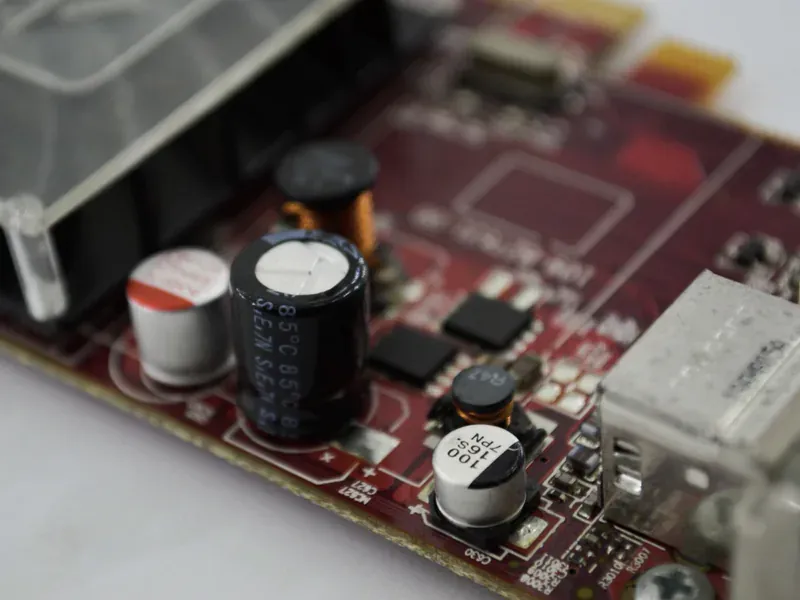
Before addressing sourcing strategy, let us define the category precisely. A special purpose logic IC is an integrated circuit designed for a specific function or narrow set of applications—unlike general-purpose logic (AND gates, flip-flops, buffers) that can serve any digital circuit.
The category spans three distinct procurement profiles:
| IC Type | Characteristics | Lead Time (Jul 2026) | Example Parts |
|---|---|---|---|
| ASIC (Application-Specific IC) | Custom-designed for one application; single-source by definition | 26–52 weeks | Automotive safety controllers, crypto accelerators |
| ASSP (Application-Specific Standard Product) | Designed for a specific function but sold to multiple buyers | 8–40 weeks | Ethernet PHY chips, SERDES, video decoders |
| PLD/FPGA (Programmable Logic) | Reconfigurable post-manufacturing; multi-sourcing possible | 30–52 weeks | Xilinx Kintex, Altera Cyclone, Lattice iCE40 |
The procurement risk ladder: ASICs carry the highest single-source risk but the lowest per-unit cost at volume. PLDs offer the most flexibility but command premium pricing. Knowing where each part on your BOM falls on this spectrum is the first step toward resilient sourcing.
Which End Markets Are Competing for the Same Logic IC Wafers?
The special purpose logic IC market in 2026 is shaped by three demand engines pulling from the same constrained mature-node capacity:
Automotive ADAS: The 32% Consumer
Automotive held 32.46% of special purpose logic IC demand in 2025 (SNS Insider), driven by the relentless expansion of Advanced Driver-Assistance Systems. A modern mid-range vehicle now contains 10–15 special purpose logic ICs managing functions from LiDAR signal processing to redundant braking controllers. Each of these parts must carry AEC-Q100 qualification—a 6–9 month certification process that effectively locks in supplier relationships and limits spot-market flexibility.
The zonal architecture transition compounds the pressure. As OEMs shift from domain-based to zonal E/E architectures, each zone controller requires its own dedicated SBC, CAN/LIN transceiver, and application-specific logic. McKinsey’s 2026 Automotive Electronics Outlook estimates the average EV now requires over 45 high-integration logic devices—roughly triple the count in a 2020-era internal combustion platform.
5G/6G Telecom: The Fastest-Growing Segment
Telecommunications is the fastest-growing application at 7.03% CAGR (SNS Insider). India’s 5G rollout, Southeast Asia’s network densification, and early 6G RAN prototyping are absorbing ASSP production—particularly SERDES, forward error correction (FEC) processors, and digital pre-distortion (DPD) ICs—at a rate that foundries cannot match with new 28nm–65nm capacity.
According to Omdia’s July 2026 Semiconductor Forecast, telecom equipment semiconductor content is growing 18.5% year-over-year, outpacing even automotive. The implication for procurement: telecom-qualified ASSPs that were readily available on 8-week turns in 2024 are now seeing 24–36 week lead times, with no near-term relief in sight.
Industrial Automation: The Silent Competitor
Industrial automation may not make headlines like AI data centers, but its demand for special purpose logic is structurally inelastic. A factory PLC, a motor drive controller, a safety PLC—these systems have 10–20 year lifecycles and cannot absorb a semiconductor redesign every two years. They consume the same 40nm–130nm wafer capacity as automotive SPLICs, and they compete for allocation at the same foundries.
How Are Foundry Allocation Decisions Affecting Special Purpose Logic Availability?
The root cause of the 2026 special purpose logic IC shortage is not a demand spike alone—it is a supply-side structural shift. TSMC, Samsung, and GlobalFoundries are allocating an increasing share of mature-node (28nm–130nm) wafer starts to products with higher revenue per wafer:
- PMICs and voltage regulators for AI server motherboards
- High-speed networking switches for data center interconnects
- Automotive MCUs with long-term purchase agreements
Special purpose logic ICs—particularly low-to-mid-volume ASICs and ASSPs—fall below these categories in foundry priority. The result: wafer starts that would have produced 10,000 gate driver ASICs are instead producing 10,000 AI server PMICs, because the latter commands a 3–5x higher ASP.
According to Accuris Technologies’ July 2026 component lead time analysis, logic IC lead times reached 40 weeks in March 2026—the highest level recorded since the pandemic-era shortage—and the “sharp step change” was driven by tariff-related front-loading and AI capacity diversion operating simultaneously.
What Strategies Actually Work for Securing Special Purpose Logic ICs in 2026?
1. Map Your BOM by IC Type and Foundry Node
Before negotiating with suppliers, know exactly what you are asking for. Categorize every special purpose logic IC on your BOM:
- Node: 28nm? 65nm? 130nm? (Older nodes = scarcer, not more available)
- Type: ASIC, ASSP, or PLD?
- Qualification: AEC-Q100? Industrial temperature range? MIL-SPEC?
- Single-source risk: Is this part sole-sourced to one foundry?
Parts on 90nm–130nm nodes with AEC-Q100 qualification are the highest-risk category in mid-2026. They compete with AI PMICs for the same wafer starts, and the qualification barrier prevents rapid supplier switching.
2. Evaluate PLD-to-ASIC Migration (and Vice Versa)
The traditional logic is “start with PLDs, migrate to ASICs at volume.” In 2026, this needs rethinking:
- PLD → ASIC: Still valid if you have 50,000+ unit annual volume and can commit to an 18-month NRE cycle. But the ASIC foundry queue is 40+ weeks, and you are betting that the capacity crunch eases by the time your design tapes out.
- ASIC → PLD: For volumes under 10,000 units/year, replacing a constrained ASIC with a functionally equivalent PLD implementation may reduce lead times from 52 weeks to 30 weeks—at a 2–3x unit cost premium. For industrial equipment where a line-down cost runs $50,000+/hour, this premium is often justified.
3. Qualify a Second-Source Packaging Partner
If your special purpose logic IC is supply-constrained at the wafer level, a second foundry source for the same design is the ideal solution—but it is rarely available. The more practical alternative: identify an ASSP or PLD from a different supplier that performs the same function with minimal PCB redesign.
For example, procurement teams sourcing automotive gate driver ICs from Infineon (TLE series) are qualifying pin-compatible alternatives from onsemi (NCV series) and STMicroelectronics (L99 series). The qualification process takes 6–9 months and requires re-validation of functional safety compliance—but once complete, it eliminates single-source dependency.
4. Use Independent Distribution Strategically
When franchise distribution allocation runs dry, the independent market is not a last resort—it is a parallel sourcing channel that, when managed with AS6081-compliant quality controls, provides supply continuity. SupplyICs maintains a global network of qualified suppliers with mandatory counterfeit detection protocols, including X-Ray inspection, decapsulation testing, and electrical verification to manufacturer specifications.
Facing allocation constraints on special purpose logic ICs? SupplyICs sources hard-to-find ASICs, ASSPs, and PLDs with full traceability and AS6081-aligned quality assurance. Submit your RFQ or upload your BOM for a response within 24 hours.
Frequently Asked Questions (FAQ)
What is driving the shortage of special purpose logic ICs in 2026?
Three converging forces are tightening supply: (1) AI infrastructure demand is diverting mature-node wafer capacity toward high-margin HBM and advanced logic, starving the 28nm–130nm nodes that most SPLICs use; (2) automotive ADAS penetration (growing at 3.88% CAGR) is pulling an additional 32% of special purpose logic output toward AEC-Q100-qualified parts; and (3) 5G/6G telecom infrastructure buildouts in Asia-Pacific, India, and the Middle East are absorbing programmable logic device (PLD) production faster than fabs can reallocate capacity. The net effect: lead times for non-allocated SPLIC parts have stretched from 12–18 weeks in early 2025 to 26–40 weeks by mid-2026.
Which special purpose logic IC types have the longest lead times right now?
Programmable Logic Devices (PLDs) and FPGAs are the most constrained, with Xilinx (AMD) and Altera (Intel) parts quoting 30–52 week lead times as of July 2026. Application-Specific Integrated Circuits (ASICs) for automotive functional safety applications follow at 26–38 weeks. Application-Specific Standard Products (ASSPs) for telecom infrastructure show the widest variance—8 weeks for commodity parts, 40+ weeks for custom variants. The sharpest deterioration is in communication-specific ASSPs, where lead times have doubled since Q4 2025.
How can I identify a second-source alternative for a single-source special purpose logic IC?
Start with a pin-to-pin cross-reference analysis of your BOM's logic IC family. For PLDs, evaluate Lattice Semiconductor (low-power) or Microchip (non-volatile FPGA) as alternatives to Xilinx/Altera. For automotive ASICs, STMicroelectronics and Renesas offer footprint-compatible alternatives to NXP and Infineon parts in certain voltage regulator and gate driver categories. For telecom ASSPs, Broadcom competitors like Marvell and MaxLinear often have functional equivalents with different package footprints—requiring PCB layout changes but avoiding complete redesign. SupplyICs maintains a cross-reference database covering 280,000+ part numbers; upload your BOM for a second-source assessment.