Table of Contents
- Define the USB Function and Topology First
- Compare Current Hub Controllers by Orderable Device
- Build an Engineering Delta Before Calling Anything an Alternate
- Validate Signal Integrity, Power, and Interoperability
- Source by Product Status and Configuration Control
- Apply Channel Controls to the Original Part
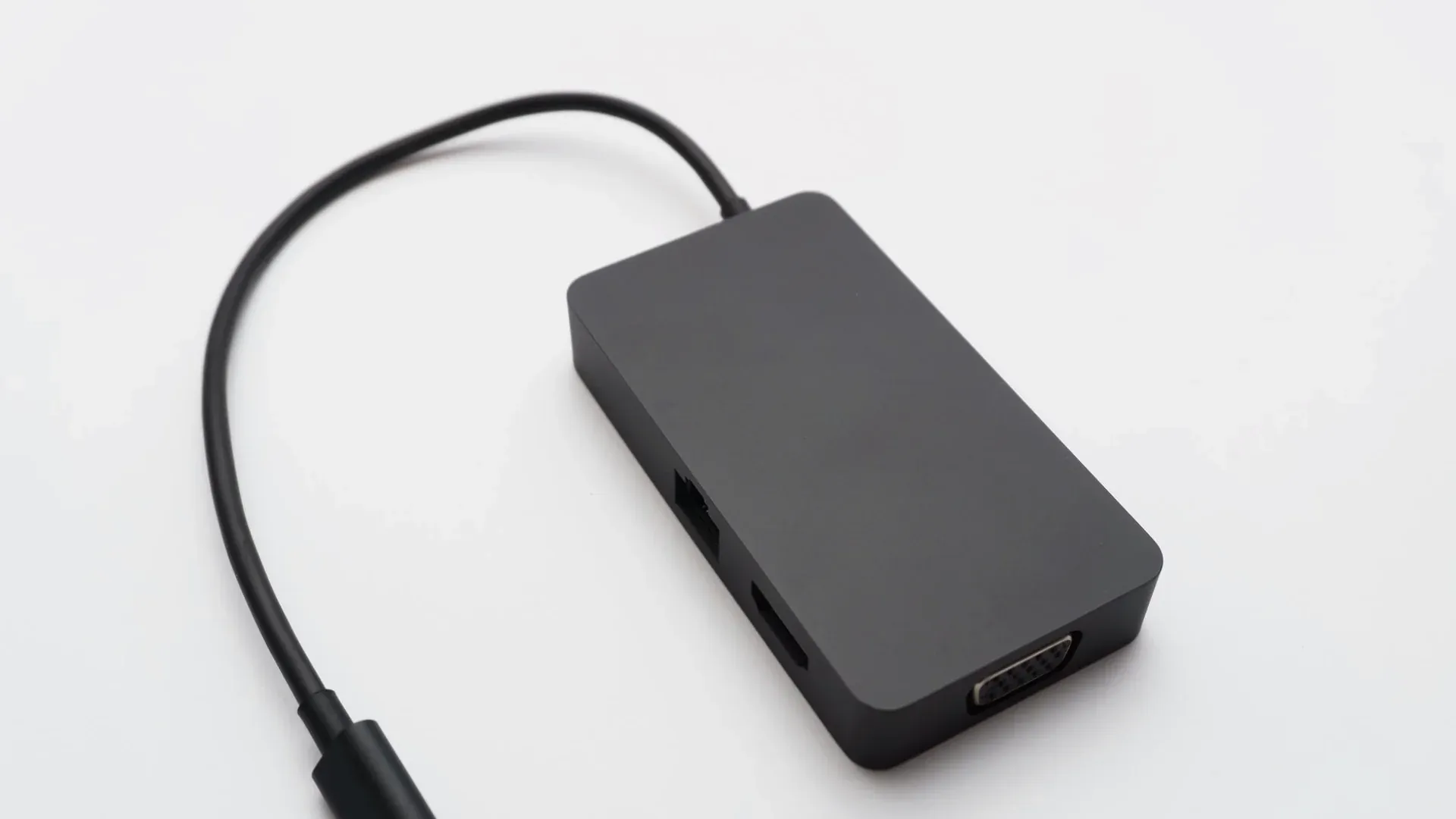
USB hub controller sourcing starts by identifying the function correctly. A hub controller is not a host controller, Type-C or Power Delivery controller, retimer, redriver, or protocol bridge. These devices may appear together in a docking station, monitor, industrial PC, or embedded gateway, but they have different architectures and replacement paths.
Renesas, Texas Instruments, and Microchip all offer active USB hub controllers. Their devices can satisfy similar high-level requirements, yet they are not generic pin-to-pin substitutes. A buyer should compare the complete USB topology, electrical interface, configuration, package, software, compliance evidence, and product lifecycle.
Define the USB Function and Topology First
Document the role of every device in the USB path:
| Function | Purpose | Replacement impact |
|---|---|---|
| Host controller | Provides the system’s host interface and transaction scheduling | Driver, PCIe or SoC interface, firmware and operating-system support |
| Hub controller | Expands one upstream connection to multiple downstream ports | Board, power, configuration, descriptors, compliance and interoperability |
| Type-C port controller | Detects attach, orientation, roles, and Type-C state | Connector behavior, policy, firmware and protection |
| USB Power Delivery controller | Negotiates voltage, current, roles and alternate modes | Power architecture, policy engine, firmware and safety |
| Redriver or retimer | Restores high-speed signal quality | Channel loss budget, equalization, protocol generation and layout |
| Protocol bridge | Converts USB to Ethernet, SATA, UART or another interface | Drivers, firmware, throughput and certification |
For the hub itself, record upstream speed, downstream port count and speed, USB 2.0 transaction-translator behavior, charging requirements, self-powered or bus-powered operation, per-port power switches, overcurrent sensing, suspend current, clock, configuration method, package, and operating temperature.
USB-C connector presence does not mean the hub supports USB4, USB Power Delivery, or an alternate mode. Those functions require additional controllers and a complete system design. The separate USB-C PD controller selection guide covers port roles, power profiles, EPR, the external power stage, firmware, and compliance.
Compare Current Hub Controllers by Orderable Device
These representative parts show why “four-port SuperSpeed hub” is not enough for cross-referencing.
| Device | Current manufacturer status, August 2026 | Published role | Differences to investigate |
|---|---|---|---|
| Renesas UPD720210 | Active; product longevity shown through 2034 | Four-port 5 Gbps USB 3.0 hub, 76-pin QFN, 0 C to 70 C | 1.05 V and 3.3 V rails, 24 MHz crystal, integrated functions, configuration and package |
| TI TUSB8041 | Active | Four-port 5 Gbps USB 3.0 hub, 64-pin VQFN, -40 C to 85 C | Package, rails, battery-charging modes, EEPROM/SMBus configuration and port control |
| TI TUSB8041A | Active | Four-port 5 Gbps USB 3.1 Gen 1 hub, 64-pin VQFN, 0 C to 70 C | Do not assume the “A” device has the same temperature or behavior as TUSB8041 |
| Microchip USB5744 | In production | Four-port SuperSpeed/Hi-Speed USB hub controller | FlexConnect, charging, configuration, bill of materials, package and software tools |
This table is for candidate discovery. Use the current datasheet and errata for the exact order code. Features may depend on strap settings, nonvolatile configuration, external EEPROM, firmware, or package option.
The Renesas product page identifies a USB-IF Test ID and a longevity date. Those are useful procurement records, but the date does not guarantee availability at a particular distributor or contractual support for a buyer. The TI and Microchip status labels likewise need to be paired with a dated quote and lifecycle monitoring.
Build an Engineering Delta Before Calling Anything an Alternate

Cross-vendor hub-controller substitution normally requires a PCB revision. Compare at least:
- Package dimensions, land pattern, exposed pad, pin assignment, and escape routing.
- Core, analog, and I/O rails; sequencing; reset; suspend current; and decoupling.
- Crystal or clock frequency, load, startup, and clock-output options.
- Upstream and downstream high-speed pairs, polarity rules, AC coupling, and termination.
- Per-port power enable, overcurrent input, gang or individual control, and power-switch polarity.
- USB 2.0 multi-transaction-translator architecture and endpoint buffering.
- Battery-charging detection and charging modes required by the product.
- Strap pins, SMBus or I2C, EEPROM image, one-time programming, descriptors, vendor ID and product ID.
- Industrial or commercial temperature, ESD rating, package qualification, and end-market evidence.
Configuration is a frequent hidden blocker. The current product may use an EEPROM image that encodes port-removable flags, charging behavior, strings, or power characteristics. A new controller can use a different map and programming tool even when the USB descriptors look familiar.
Document what can be reused, what changes, and which test proves each delta. The result is a functional-alternative plan, not a P2P cross-reference.
Validate Signal Integrity, Power, and Interoperability
High-speed USB performance depends on the implementation. Package change, pin escape, layer transition, connector choice, ESD protection, common-mode choke, redriver, cable, and enclosure can change insertion loss and reflections.
The validation plan should cover:
- Power-up, reset, clock startup, suspend, resume, remote wake and brownout.
- Enumeration and descriptor correctness on all supported operating systems.
- USB 2.0 low, full and high-speed devices plus SuperSpeed devices on every port.
- Hub depth, simultaneous traffic, transaction-translator behavior, and error recovery.
- Port power, inrush, overcurrent, charging, disconnect and thermal behavior.
- Transmitter and receiver electrical testing with the applicable fixtures and procedures.
- Interoperability across a defined device, host, cable, and dock matrix.
- EMC, ESD, environmental and product-specific qualification after the board change.
The USB-IF compliance program uses Test IDs, compliance procedures, workshops, and authorized independent test laboratories. USB-IF also maintains a public product search for products certified to bear a USB-IF logo. A hub silicon Test ID does not automatically certify a board or finished product using that silicon.
USB-IF notes that its public product search defaults to products certified within the last two years and that older certifications may not reflect the current compliance iteration. Record the applicable test program and product listing rather than citing an undated “integrators list” link.
Source by Product Status and Configuration Control
For each approved hub controller, retain:
- Full orderable part, package, temperature option, packing method and product status.
- Datasheet and errata revision used by the design.
- EEPROM or configuration image, programming tool version, checksum and release record.
- USB vendor and product identifiers, strings, Test ID or certification records as applicable.
- Manufacturer and authorized-channel PCNs, last-time-buy terms and longevity information.
- Current quote date, quantity, location, acknowledged delivery and cancellation terms.
Do not publish a vendor-wide lead-time table based on reseller pages. A commercial-temperature catalog part, industrial-temperature part, special package, and legacy controller can have different availability. Track a basket of the exact approved order codes if market monitoring is required.
Design continuity around validation time. A controller with more visible inventory may be the worse second source if it requires a new power tree, EEPROM, certification cycle, or operating-system update. Keep the validated board variant, software, and compliance evidence ready before the primary part becomes constrained.
Apply Channel Controls to the Original Part
When an original approved controller is unavailable through authorized supply, an independent source may bridge a finite production gap. The exception should identify the exact part, quantity, lot, builds, and required evidence.
Request legal seller identity, stock ownership, upstream source, label and device photos, date and lot codes, packaging, storage history, and return terms. Reconcile the physical material to the approved order code and configuration. For programmed devices, confirm whether the material is blank, factory configured, customer programmed, or previously used.
Inspection and electrical testing should follow the part and application risk. Visual inspection cannot establish USB protocol compliance or the complete internal device identity. Any functional test needs defined fixtures, firmware, sample size, limits, and raw results.
AS6081 alignment or certification can support review of an independent distributor’s counterfeit-avoidance system, but it does not make the lot authorized by Renesas, TI, or Microchip. Keep the source decision separate from the engineering qualification of a replacement.
The reliable USB controller strategy is therefore two-track: preserve traceable supply for the exact approved device, and maintain a separately validated functional alternative with its own PCB, configuration, compliance, and lifecycle record.
Frequently Asked Questions (FAQ)
Are Renesas, TI, and Microchip USB hub controllers pin-to-pin alternatives?
Generally no. Devices differ in package and pinout, power rails, clocks, configuration memory, charging features, port control, firmware behavior, and external components. Treat a cross-vendor change as a board and validation project.
Is a USB hub controller the same as a USB host controller?
No. A hub expands one upstream USB connection into downstream ports, while a host controller initiates and schedules USB transactions for the system. A Type-C port controller, USB Power Delivery controller, retimer, redriver, and protocol bridge are also separate functions.
Does a USB-IF-certified hub IC make the finished product certified?
No. Silicon certification can reduce risk, but the finished implementation still includes connectors, layout, signal integrity, power, descriptors, charging behavior, firmware, and enclosure effects. The product must follow the applicable USB-IF compliance path.
How should buyers compare USB hub controller availability?
Use the exact orderable part, package, temperature range, quantity, quote date, product status, physical stock evidence, and factory-acknowledged delivery. Avoid applying one seller's lead time to an entire USB generation or vendor family.