
Table of Contents
- Derive Semiconductor Requirements from the TCU Safety Concept
- Map the Complete Semiconductor Control Loop
- Compare MCU Platforms by Architecture and Evidence
- Select Solenoid Drivers as Calibrated Actuator Components
- Plan MCU and Driver Migration as a Vehicle Change
- Source by Exact Part, Lifecycle, and Program Milestone
A transmission control unit (TCU) is a real-time actuator controller, not a generic automotive ECU with a fixed chip list. Its semiconductor requirements depend on the transmission architecture, hydraulic or electromechanical actuators, sensor interfaces, network topology, mounting temperature, diagnostic coverage, cybersecurity concept, and safety goals.
Procurement should therefore source against the approved system and safety requirements. Labels such as “ASIL D MCU,” “AEC-Q100 Grade 1,” or “TCU-compatible driver” identify useful capabilities, but none proves that a part is suitable for a particular vehicle program.
Derive Semiconductor Requirements from the TCU Safety Concept
ISO 26262 assigns Automotive Safety Integrity Levels through the item definition, hazard analysis and risk assessment, safety goals, and subsequent allocation. It does not assign ASIL D to every TCU or every component inside one.
An MCU marketed with ASIL D support can provide safety mechanisms, analysis reports, a safety manual, and development evidence that help an integrator build an ASIL D-capable system. The vehicle manufacturer or Tier 1 still has to integrate those mechanisms correctly and demonstrate that the TCU’s hardware and software meet the allocated requirements.
Before approving a semiconductor, connect it to the technical-safety concept:
- Which faults can cause unintended torque, gear engagement, loss of propulsion, or loss of park function?
- Which functions must remain available, move to a safe state, or degrade after a fault?
- What diagnostic coverage, fault-tolerant time interval, and latent-fault handling are required?
- Which safety mechanisms depend on lockstep cores, ECC memory, watchdogs, voltage monitoring, redundant sensing, or driver diagnostics?
- What independence or freedom-from-interference argument applies when several functions share a controller?
The same principle applies to the AEC-Q100 grade. The Automotive Electronics Council defines qualification requirements for integrated circuits and temperature grades. Select a grade from the component’s actual thermal environment and junction-temperature analysis. Transmission-mounted electronics can be much hotter than a remotely mounted controller, so neither Grade 1 nor any other grade is a universal “TCU floor.”
Map the Complete Semiconductor Control Loop
A typical TCU BOM contains several interacting device groups:
| Function | Semiconductor role | Selection constraints |
|---|---|---|
| Main control | Executes shift strategy, diagnostics, communications, and safety functions | Deterministic timing, memory, safety architecture, software ecosystem, security |
| Solenoid actuation | Regulates peak-and-hold current and detects load faults | Channel count, current profile, recirculation, diagnostics, external FET architecture |
| Motor actuation | Drives pumps, clutch actuators, or shift motors | Voltage, current, commutation, protection, thermal design |
| Power and supervision | Generates rails, monitors voltage, controls wake/sleep, and resets the MCU | Safety mechanisms, transient immunity, watchdog independence, sequencing |
| Sensing | Conditions speed, position, pressure, and temperature signals | Accuracy, diagnostics, SENT/PSI5/analog interface, fault detection |
| Vehicle network | Connects CAN, CAN FD, or LIN buses | Wake behavior, partial networking, EMC, bus-fault protection, security concept |
The MCU and solenoid driver are tightly coupled through timer resolution, PWM, current-feedback sampling, diagnostics, and calibration. Replacing either can alter clutch-pressure control and shift quality even when the electrical ratings appear equivalent.
For a nonisolated vehicle-network interface, the CAN FD transceiver selection guide details suffix-dependent data rates, logic supplies, wake behavior, and pin checks. Controller protocol support and transceiver physical-layer compatibility require separate confirmation.
The power device is equally important. A safety MCU cannot meet its system goal if the system basis chip or regulator lacks the required monitoring, watchdog, or fault-reaction path. Approve the MCU, power, driver, and diagnostic architecture as a set.
Compare MCU Platforms by Architecture and Evidence
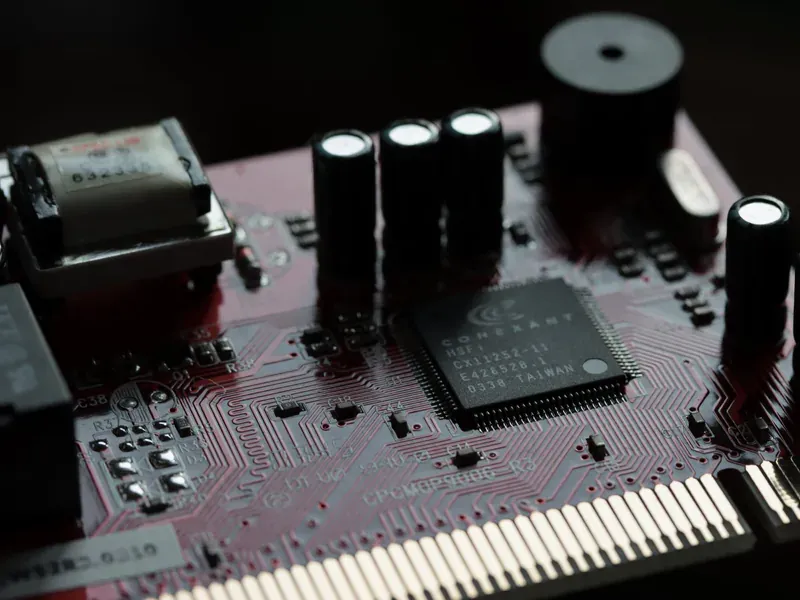
Several current MCU families target engine, transmission, powertrain, or vehicle-motion control. The relevant comparison is not market share; it is how a specific derivative fits the existing hardware, software, and safety case.
| Platform example | Manufacturer-published positioning | Integration questions |
|---|---|---|
| Infineon AURIX TC3x | TriCore family for powertrain, transmission, safety, and other automotive control | Exact core configuration, GTM/timer use, package, safety manual, AUTOSAR stack, TC2x migration limits |
| NXP MPC5746R | Power Architecture MCU for engine and transmission control with ASIL D support | eTPU usage, package, memory, legacy software, compiler and debug environment |
| NXP S32 family | Scalable automotive MCU platforms used across control domains | Confirm the exact derivative and whether its peripherals and safety architecture fit the TCU |
| Renesas RH850/U2B | High-end cross-domain MCU supporting engine and transmission functions | G4MH core, timer and motor-control peripherals, MCAL, package, migration from RH850/E-series |
| Renesas RH850/E1M-S2 | Powertrain MCU explicitly positioned for engine and transmission control | Legacy product status, toolchain, memory, package, long-term support plan |
A family name is not an orderable alternate. TC3x derivatives, S32 devices, MPC57xx devices, and RH850 variants differ internally. Procurement must retain the full part number, silicon step, package suffix, temperature option, flash configuration, and applicable errata.
Manufacturer statements such as “meets ASIL D requirements” or “ASIL D support” must be read with the safety manual and integration assumptions. They do not make software, board design, or the finished TCU automatically ASIL D-compliant.
Select Solenoid Drivers as Calibrated Actuator Components
NXP’s current transmission application material lists the MC33816 programmable solenoid driver and PT2000 programmable solenoid-controller gate driver among its recommended products. They represent two different implementation styles rather than universal anchors for every transmission.
Compare driver candidates on:
- Number and type of loads, peak and hold current, PWM method, recirculation, and external FET requirements.
- Current-measurement accuracy, timing resolution, closed-loop control, and calibration storage.
- Open-load, short-circuit, overtemperature, supply, and plausibility diagnostics.
- Safe-state behavior after MCU, communication, power, or internal driver faults.
- SPI protocol, register protection, watchdog, CRC, fault pins, and startup defaults.
- Package thermal resistance, exposed-pad design, current sharing, and EMC behavior.
An alternate may require new current-control software, analog filtering, MOSFETs, PCB copper, diagnostics, and transmission calibration. Even if the package fits, those changes can affect hydraulic pressure and clutch behavior. Describe it as a functional alternative subject to validation, not a pin-to-pin cross-reference.
Plan MCU and Driver Migration as a Vehicle Change
Cross-vendor MCU migration changes the CPU architecture, low-level software, calibration tools, safety library, diagnostics, memory map, boot process, cybersecurity functions, hardware pins, and often the power tree. It typically requires a new board revision and renewed evidence across functional safety, cybersecurity, EMC, environmental tests, and vehicle calibration.
Within-family migration can also be substantial. For example, an Infineon TC2x-to-TC3x move may preserve parts of the ecosystem but does not guarantee pin compatibility or unchanged timing behavior. A Renesas RH850/E-series-to-U2 move changes cores and peripherals. Confirm the migration guide and derivative-specific differences before assigning a schedule.
Use this classification in the AVL:
| Alternate class | Expected change | Approval approach |
|---|---|---|
| Same orderable part, different authorized source | Commercial source only | Traceability and source approval |
| Same family, package-compatible derivative | Memory or peripheral differences possible | Datasheet delta plus targeted software and hardware validation |
| Same supplier, new MCU generation | Architecture and ecosystem migration | Formal redesign and safety impact analysis |
| Cross-vendor MCU | New CPU, peripherals, tools, safety evidence, and board | Platform redesign and full revalidation |
| Solenoid driver alternate | Control loop, diagnostics, FETs, and calibration may change | Actuator, thermal, EMC, diagnostic, and vehicle validation |
This prevents procurement dashboards from marking a strategic redesign as an immediately available second source.
Source by Exact Part, Lifecycle, and Program Milestone
Avoid family-wide 2026 lead-time claims. A lead time varies by exact part, package, silicon revision, customer allocation, region, order quantity, and forecast. Record the quote date and distinguish a factory-acknowledged delivery from a distributor estimate.
At sourcing approval, collect:
- Manufacturer product status, PCN history, last-time-buy terms, and authorized sales path.
- Datasheet, errata, safety manual access, qualification results, and required software licenses.
- Order code, package, grade, packing method, date and lot codes, and silicon revision controls.
- Forecast, firm-order horizon, allocation rules, minimum order quantity, and cancellation liability.
- Prototype, validation, PPAP, start-of-production, service, and end-of-production demand separated by milestone.
- Requalification duration and remaining inventory for every single-sourced Tier A component.
If an independent channel is needed for an original part, require seller identity, chain of custody, lot and label photos, storage history, and the inspection or electrical tests specified by the automotive quality authority. AS6081 alignment does not replace manufacturer traceability or automotive qualification.
The durable TCU sourcing plan connects every critical semiconductor to the system safety concept, thermal environment, calibrated function, software ecosystem, validated alternates, lifecycle status, and exact supply path. That is a stronger basis for continuity than a table of generic ASIL labels or temporary distributor lead-time ranges.
Frequently Asked Questions (FAQ)
Does every transmission control unit require ASIL D?
No. The required Automotive Safety Integrity Level is derived from the vehicle item's hazard analysis and risk assessment and allocated through the safety concept. Some TCU safety goals may be ASIL D, while other functions or elements may have different classifications.
Is AEC-Q100 Grade 1 mandatory for every TCU integrated circuit?
No universal grade applies to every component. Select the AEC-Q100 temperature grade and device rating from the measured or modeled junction and ambient conditions at the component location, including self-heating, transients, cooling, and design margin.
Can an Infineon AURIX MCU replace an NXP MPC57xx or Renesas RH850 MCU?
Not as a pin-to-pin or software-compatible substitute. The CPU architecture, package, peripherals, safety mechanisms, toolchain, low-level software, calibration, and safety evidence differ. A cross-vendor change is a redesign and revalidation program.
What records should procurement request for a TCU semiconductor alternate?
Request the exact ordering code, lifecycle status, package and temperature grade, qualification evidence, functional-safety documentation access, PCN history, software and tool support, source traceability, and an engineering validation plan for the intended TCU.