Table of Contents
An X-ray fluorescence report can be useful evidence for a component purchase, but only when the measured material and the requested conclusion match. A reading from one terminal is not the composition of the entire package. A total-chromium result is not a measurement of chromium’s chemical state.
For buyers, the central task is to order a defined screening service. Identify the material, the suspected issue, the measurement locations and the evidence needed to resolve it before comparing laboratory prices.
Does an XRF result prove RoHS compliance?
An XRF result alone does not prove complete RoHS compliance. XRF measures elemental signals under specified conditions; compliance can depend on restricted chemical forms, different homogeneous materials, applicable exemptions and evidence beyond that measurement.
The official scope of IEC 62321-3-1:2026, published May 6, 2026, describes screening for specified elements in uniform materials. Its use of total chromium and total bromine is an important boundary: an elemental total does not identify a particular chromium oxidation state or brominated compound.
A purchasing report should therefore state what was screened, what result was obtained and what further assessment remains. Keep declaration and exemption decisions in the separate component compliance record.
What should the laboratory actually measure?
The measurement target should be a defined material or feature, such as a termination finish, solder region, package material or suspected contaminant. The spot size, geometry and analytical method must be suitable for that target.
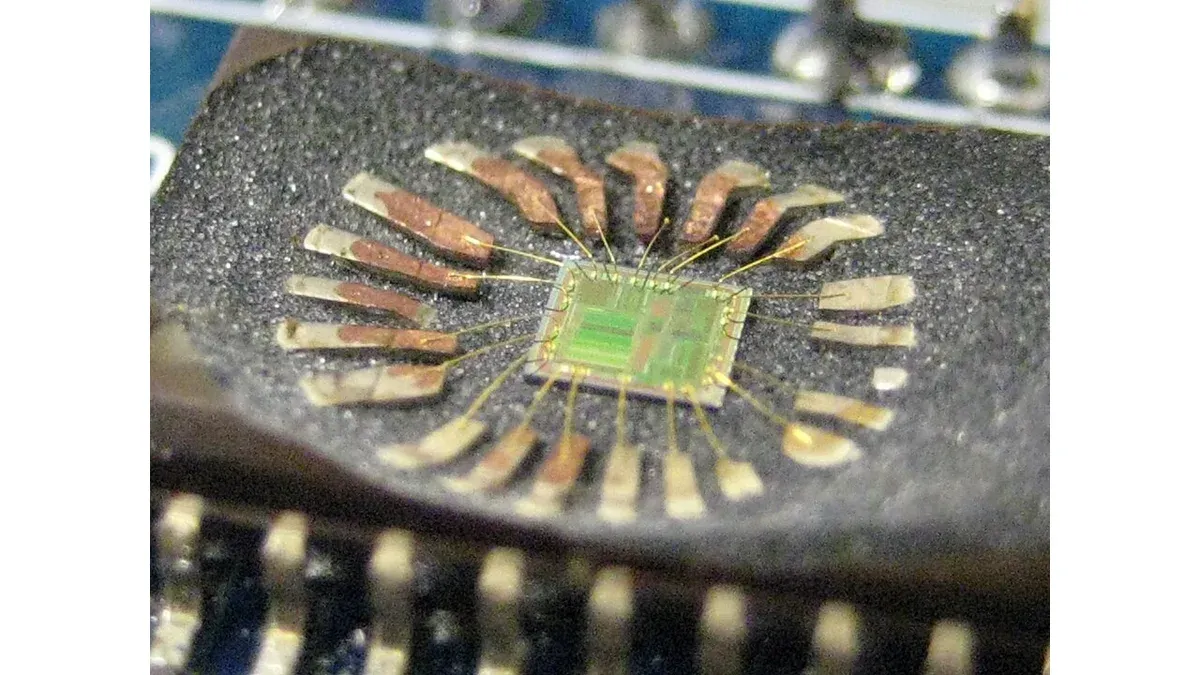
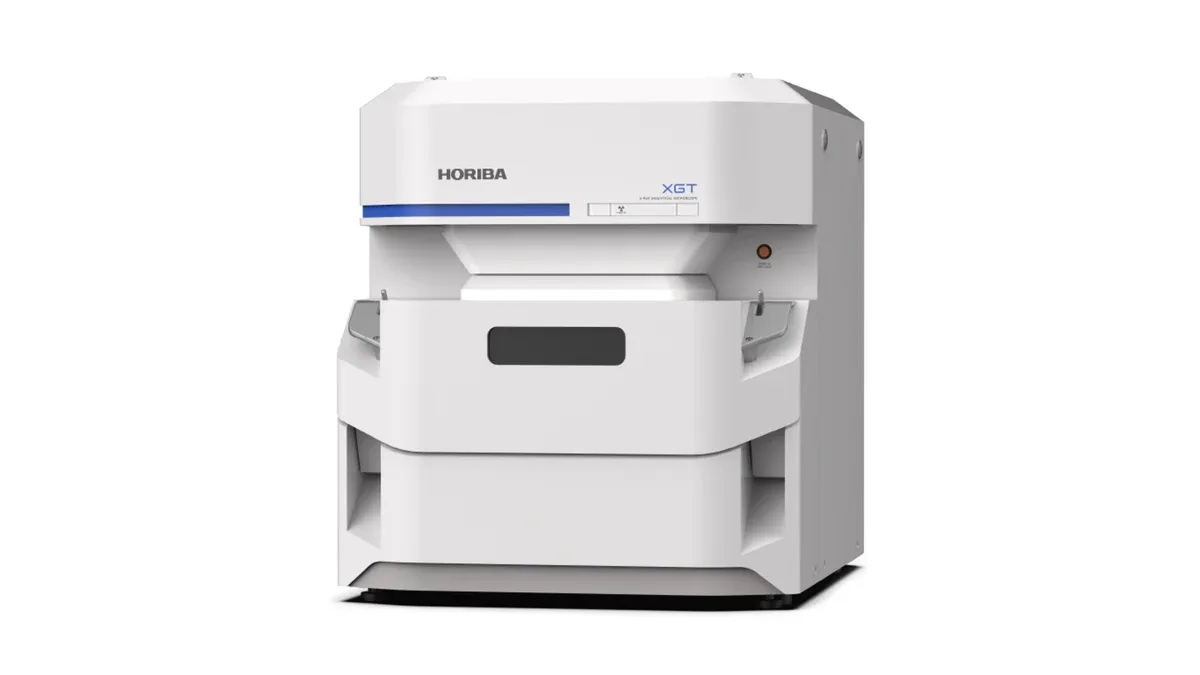
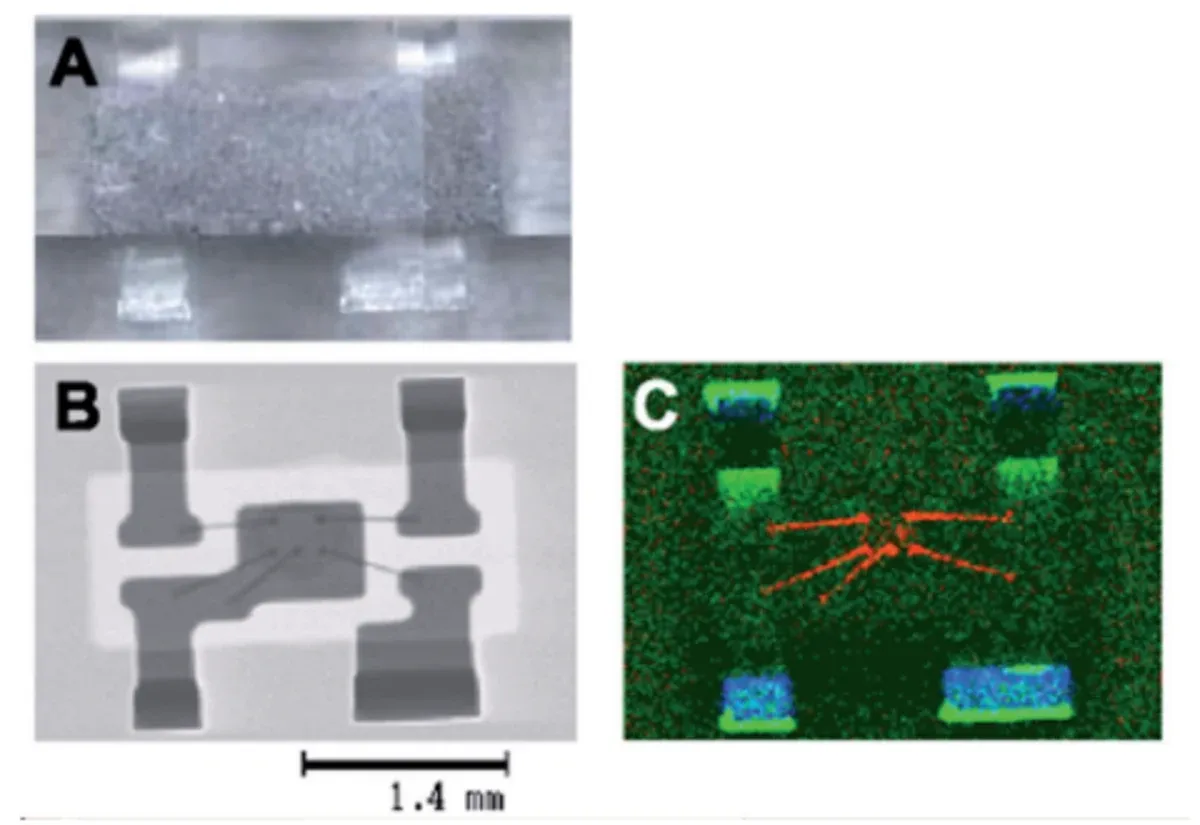
HORIBA’s electronics micro-XRF example combines optical, transmitted-X-ray and elemental information for a resin-embedded chip. It shows why location and spatial resolution matter: different regions of a component contain different materials.
For a small terminal, a beam that also covers substrate or nearby material may yield a mixed signal. A multilayer finish can require a coating model rather than a bulk-material assumption. Ask the laboratory to explain those effects in relation to the actual sample, not only its instrument’s catalog capabilities.
How do you compare XRF service quotes on the same basis?
Give each laboratory the same sample plan, material question, reporting units, method requirements and escalation rule. A low per-unit price is not comparable if one offer includes several controlled locations and another includes a single quick reading.
| Quote field | Information to request | Why it changes interpretation |
|---|---|---|
| Sample identity | Part, lot, unit and measurement-site references | Connects the result to purchased material |
| Preparation | As-received, separated material or another defined condition | Determines what the beam actually sees |
| Measurement geometry | Spot size, orientation and relevant layer assumptions | Exposes mixed-material effects |
| Analytical basis | Method revision, calibration and reference checks | Establishes how the result was obtained |
| Reporting | Units, detection limits and uncertainty where applicable | Prevents an unjustified pass/fail shortcut |
| Escalation | Treatment of borderline or inconclusive results | Defines the next action before results arrive |
Do not prescribe a method solely by its name. The laboratory should confirm that its validated scope covers the intended material and question.
When should an elemental screen trigger another method?
Escalate when the decision depends on a chemical form that elemental screening cannot identify, when the result is near the relevant decision boundary, or when geometry and matrix effects make the result inconclusive. The follow-up method should resolve that particular uncertainty.
For example, detecting chromium does not settle whether a restricted chromium form is present. Likewise, a bromine signal does not identify which brominated substance produced it. A compound-specific question requires suitable additional evidence or analysis.
Avoid turning every detection into an automatic rejection. A legitimate constituent, permitted use or unrelated chemical form may explain the signal. Conversely, a low reading at one accessible surface does not clear all inaccessible materials.
Preserve the scope in the purchase disposition
The disposition should reference the exact report, inspected samples and resolved question. Record any remaining limitation alongside the resulting release, hold or request for more evidence.
For an incoming lot, the screening result can be combined with identity records and supplier declarations. It should not be relabeled “all substances passed” unless the complete evidence supports that scope. Precise report language helps the buyer make a defensible decision and prevents a limited screening result from acquiring a broader meaning as it moves through the supply chain.
Frequently Asked Questions (FAQ)
Can XRF verify the thickness of a component's plating?
Some systems and validated methods can measure coating thickness, but the layer model, substrate, calibration and geometry must be appropriate. A general elemental screen is not automatically a plating-thickness measurement.
Does a non-detect result mean the element is absent?
No. It means the method did not detect the element under its stated conditions and detection limit. Report the limit and measurement basis rather than replacing the result with zero.
Should mixed component lots be combined into one screening result?
Keep lot and sample identities separate unless the sampling plan explicitly supports the combined interpretation. One measured unit or spot cannot establish uniformity across unrelated material.