Table of Contents
- What Is Driving the 2026 Obsolescence Wave?
- Which Component Categories Are Going Obsolete Right Now?
- How Do You Build a Proactive Obsolescence Management System?
- What Does a Continuous Lifecycle Monitoring System Look Like?
- What Is the Right Way to Calculate a Last-Time-Buy?
- Where Do You Find Obsolete Parts After the Authorized Channel Runs Dry?
- When Should You Redesign Instead of Keep Sourcing?
- What Does This Mean for Your 2026 Sourcing Strategy?
In April 2026, a mid-sized German industrial drives manufacturer received a product discontinuation notice (PDN) for an STMicroelectronics L6470 stepper motor driver IC that was designed into seven of its active products. The last-time-buy window: 90 days. The problem: three of those products had another eight years of guaranteed service life under customer contracts. The LTB calculation came to 14,200 units. Authorized distributor stock across Europe totaled 3,100. The shortfall: 11,100 units with no obvious path to fill it.
This scenario is not exceptional. It is structural.
In July 2026, component obsolescence has become the single most predictable disruption in electronics procurement—and yet the one for which most organizations remain least prepared. The numbers are brutal: 470,000-plus electronic components are declared EOL every year, according to Flip Electronics’ 2026 industry analysis. Mature-node foundry capacity continues to shrink as TSMC, Samsung, and GlobalFoundries redirect capital toward sub-7nm nodes for AI accelerators and HPC. The result is a procurement environment where EOL is no longer an exception event confined to niche legacy designs—it is a permanent, accelerating feature of the semiconductor landscape.
What Is Driving the 2026 Obsolescence Wave?
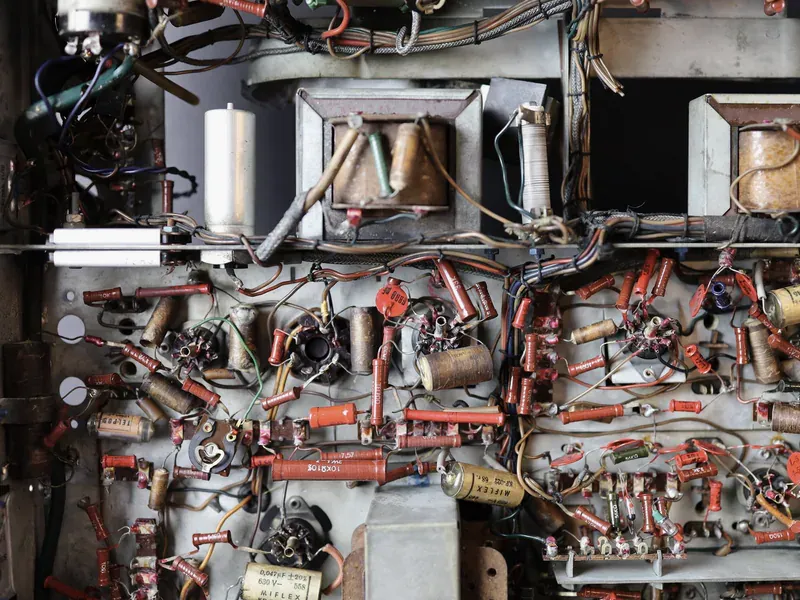
The common assumption is that components go EOL because they are technologically obsolete. The data says otherwise. A 2026 survey by Vyrian found that nearly 80% of EOL events are now driven by low market demand rather than technical advancement. This is a critical distinction: the parts being discontinued are not necessarily inferior. They are simply insufficiently profitable for manufacturers who can earn higher margins on newer, higher-volume product lines.
| EOL Driver | Share of Events | Procurement Implication |
|---|---|---|
| Low market demand (manufacturer portfolio rationalization) | ~78% | Part may have years of functional relevance; source through independent distributors |
| Fab process migration (mature node deprioritization) | ~12% | Affects entire product families; requires architectural redesign or aftermarket sourcing |
| Supplier consolidation (M&A-driven) | ~7% | Overlapping product lines get rationalized; alternate sources may exist |
| Genuine technical obsolescence | ~3% | No functional replacement exists; redesign is mandatory |
The mature-node capacity story is equally important. Foundries have added roughly 80% more advanced-node capacity (sub-7nm) since 2023, while mature-node capacity (28nm and above) has grown by less than 10% in the same period. Components built on these mature processes—analog ICs, power management devices, microcontrollers, and interface ICs—are the workhorses of industrial, automotive, and medical electronics. And they are precisely the components most exposed to EOL risk because no one is building new fabs for them.
Which Component Categories Are Going Obsolete Right Now?
The EOL picture varies significantly by component category. Some sectors are experiencing concentrated discontinuation activity in 2026:
| Component Category | EOL Status (Mid-2026) | Example Families Affected | Replacement Difficulty |
|---|---|---|---|
| DDR4 Memory | Active reduction — manufacturers shifting to DDR5 | Samsung, SK Hynix DDR4 SDRAM | Moderate — DDR5 not drop-in compatible |
| Legacy Analog ICs | Accelerating — TI discontinued 200+ SKUs since 2023 | Op-amps, voltage regulators, interface ICs from TI, ADI | Low-Moderate — functional equivalents often exist |
| 8-bit MCU Families | NRND notices accumulating | PIC16, ATmega variants at Microchip | Moderate — 32-bit migration requires firmware rework |
| Industrial FPGAs | Selective EOL on mature families | Xilinx Spartan-6, Altera Cyclone III/IV | High — pinout changes require board redesign |
| Through-Hole Components | Structural decline | DIP packages across all manufacturers | Low — SMT equivalents usually available |
| Power Management ICs | Critical shortage + EOL overlap | Infineon, ON Semiconductor legacy PMICs | Moderate-High — qualification burden for alternates |
How Do You Build a Proactive Obsolescence Management System?

The difference between a company that handles EOL smoothly and one that faces $45,000 emergency board respins is not budget. It is process. Organizations with proactive component replacement protocols reduce unplanned redesign cycles by 67% compared to those using reactive obsolescence management, according to J2 Sourcing’s 2026 EOL playbook.
What Does a Continuous Lifecycle Monitoring System Look Like?
The foundation of proactive EOL management is knowing about a discontinuation the day it is announced. Subscribe to PCN (Product Change Notification) and PDN (Product Discontinuation Notice) alerts from your top 20 manufacturers by BOM value. Aggregation tools like SiliconExpert, IHS Markit CAPS, and authorized distributor lifecycle feeds consolidate these alerts. But the tool is only as good as the BOM it monitors: every component in your system must be mapped to a manufacturer part number with its current lifecycle status.
What Is the Right Way to Calculate a Last-Time-Buy?
The LTB calculation is the most financially consequential math a procurement team performs. Get it wrong, and you either run out of parts mid-lifecycle or tie up millions in inventory for components you never use.
Where:
Buffer Factor = 1.2 (stable demand) to 1.5 (volatile demand, regulated industry)
Warranty Reserve = 5–10% of total LTB quantity
Add 2–3 years for medical/aerospace regulatory recertification
The biggest mistake: using current-year unit consumption for a product with 8-10 remaining years of service life. If your product has a 10-year support commitment and the current year reflects depressed demand, you will systematically under-buy.
Where Do You Find Obsolete Parts After the Authorized Channel Runs Dry?
When the manufacturer’s authorized distributors have zero stock—and for components 90+ days past the LTB cutoff, this is the norm rather than the exception—there are three legitimate sourcing paths:
-
Authorized aftermarket suppliers. Companies like Flip Electronics and Rochester Electronics hold franchise agreements to continue manufacturing or supplying discontinued parts. This is the lowest-risk option, but coverage is limited to specific manufacturers.
-
Independent distributors with AS6081-compliant inspection. Independent distributors source from global open-market inventory—OEM excess, contract manufacturer surplus, and legacy stock. The key differentiator is whether they perform in-house authentication: X-ray inspection, decapsulation analysis, marking verification, and electrical testing should be standard for any obsolete part sourced through this channel.
-
Direct OEM excess engagement. Some OEMs maintain inventory of EOL parts long after their own production ends. Building relationships with OEM component engineering groups can surface these caches before they reach the broker market.
When Should You Redesign Instead of Keep Sourcing?
There is a point at which continuing to source an obsolete part costs more than redesigning the board. The breakeven calculation:
| Decision Factor | Keep Sourcing EOL Part | Redesign Board |
|---|---|---|
| Remaining product life | < 3 years | > 5 years |
| Annual volume | < 500 units | > 2,000 units |
| Part premium vs. original cost | 2-5x | > 10x |
| Regulatory recertification cost | N/A | < $50,000 |
| Alternate part availability | No drop-in exists | Drop-in or footprint-compatible exists |
For industrial automation equipment, medical devices, and aerospace systems with 15-20 year service lives, the math almost always favors sourcing continuation through independent channels for the first 5-7 years post-EOL, then transitioning to a redesign in the later years when inventory genuinely exhausts.
What Does This Mean for Your 2026 Sourcing Strategy?
The structural trend is unambiguous: component lifecycles are contracting, mature-node capacity is not growing, and EOL notices are accelerating. Procurement teams that treat obsolescence as a fire drill will continue to pay the cost of emergency respins (typically $35,000-$75,000 per incident) and production line downtime (€380,000+ per day for mid-tier manufacturers).
The playbook is clear: continuous lifecycle monitoring integrated with your BOM, pre-qualified alternates for every critical-path component, disciplined LTB calculations built on realistic lifecycle demand, and verified independent distribution relationships established before the EOL notice arrives.
Frequently Asked Questions (FAQ)
How many electronic components go obsolete each year?
Over 470,000 electronic components are declared end-of-life (EOL) annually according to Flip Electronics' 2026 industry analysis. Mature-node ICs at 28nm and above make up the majority of these EOL notices because foundries are steadily reallocating wafer capacity toward advanced nodes for AI, HPC, and high-margin mobile applications.
What is the difference between EOL, obsolete, and NRND?
EOL (End of Life) means the manufacturer has issued a formal discontinuation notice with a defined last-time-buy window. Obsolete means the part is no longer produced and factory inventory is depleted. NRND (Not Recommended for New Design) means the part is still in production but not recommended for new projects — it will likely transition to EOL within 12-24 months. Procurement teams should treat NRND as an early warning signal and begin qualification of alternatives immediately.
How should procurement teams calculate last-time-buy quantities?
LTB calculation requires: total product lifecycle remaining (in years) × annual unit consumption × buffer factor (1.2-1.5x for demand uncertainty) + warranty/repair reserve (typically 5-10% of total). For regulated industries like medical and aerospace, add 2-3 years of buffer to cover regulatory recertification timelines. Common mistake: using current-year demand for a product with 10 remaining years of service life.