Table of Contents
Why Is the Automotive System Basis Chip Market So Tight?
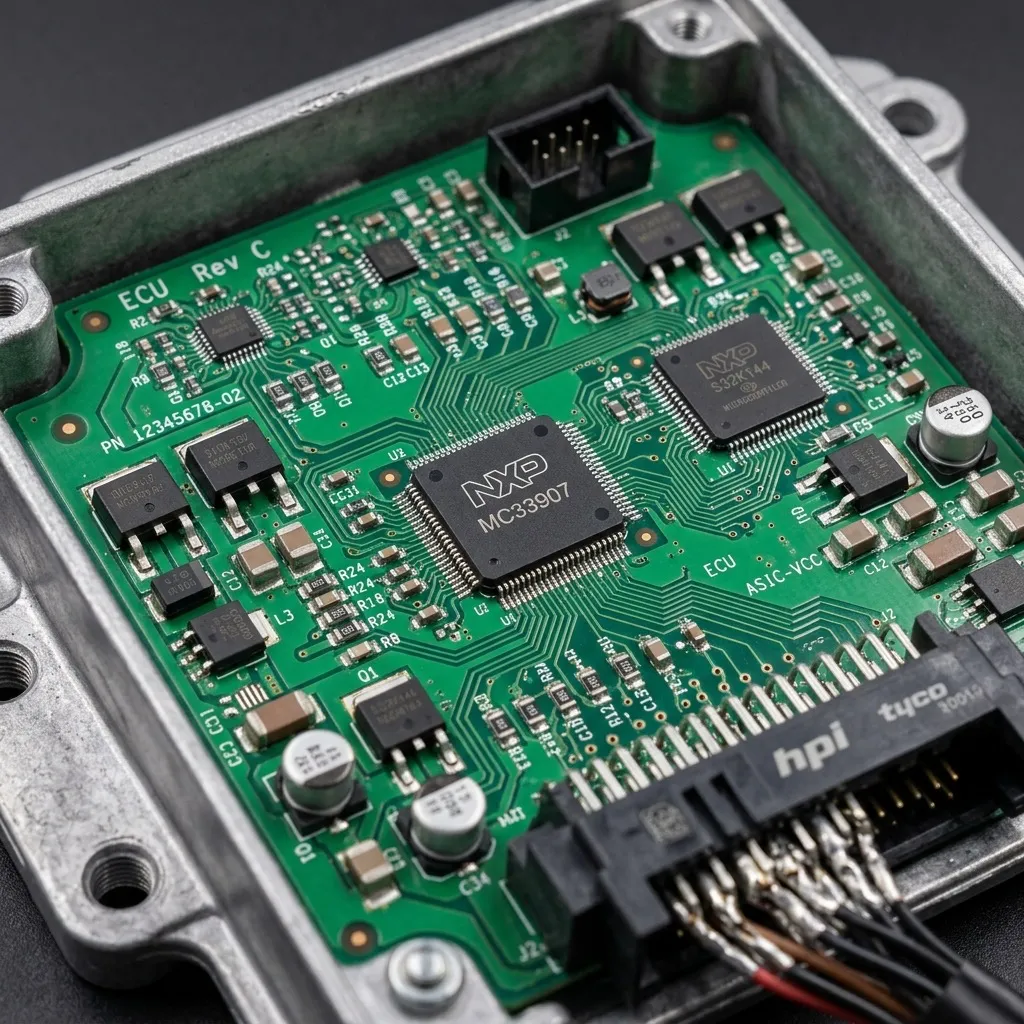
The proliferation of distributed electronic control units (ECUs) in modern vehicles has pushed the automotive system basis chip market into a state of structural allocation, with lead times for dominant players like NXP and Infineon extending beyond 30 weeks. System Basis Chips (SBCs) are the unsung heroes of automotive electronics, integrating vital power management (LDO/DC-DC), in-vehicle networking transceivers (CAN-FD, LIN), and safety watchdogs into a single package. Because these highly integrated, safety-critical components are manufactured on heavily constrained mature nodes (55nm to 90nm), foundry capacity cannot scale quickly enough to meet the demand generated by the transition to software-defined vehicles.
As a supplier specializing in automotive component shortages, we witness the pain of SBC allocation daily. Recently, a major Tier-1 manufacturer of body control modules was faced with a complete production halt due to a severe shortage of an NXP UJA116x series SBC. Utilizing our global sourcing network, we were able to supply 15,000 verified pieces from an OEM excess pool within two weeks, ensuring their just-in-time delivery schedule to the automaker remained intact.
This article details the specific constraints within the system basis chip automotive sector and outlines actionable strategies for identifying Pin-to-Pin (P2P) replacements.
What Makes an SBC So Hard to Replace?
When a standard LDO regulator or CAN transceiver goes out of stock, finding a drop-in replacement is usually straightforward. Why is replacing an SBC a procurement nightmare?
The difficulty stems from the highly integrated and customizable nature of the component:
- Functional Integration: An SBC replaces three or four discrete ICs. Finding another manufacturer that offers the exact same combination of a 5V LDO, a 3.3V sensor supply, a CAN-FD transceiver, and a specific watchdog window timer in a single chip is mathematically challenging.
- Pin-to-Pin (P2P) Incompatibility: Because SBCs handle both power routing and communication, pinouts vary wildly between manufacturers. An NXP SBC will almost never have the exact same footprint as an Infineon or STMicroelectronics SBC.
- Software and SPI Configuration: Modern SBCs are configured via SPI (Serial Peripheral Interface) by the host microcontroller during power-up. Changing the SBC requires rewriting the low-level MCU driver software, triggering a costly and time-consuming automotive recertification process (e.g., ASIL qualification).
How Do Major SBC Brands Compare on Lead Times?
Understanding the landscape of the dominant suppliers is crucial for forecasting. Here is the Q3 2026 outlook:
| SBC Manufacturer | Key Product Families | 2026 Lead Time Outlook |
|---|---|---|
| NXP Semiconductors | UJA116x, FS84/FS85, FS32K | 30 - 45 weeks (Severe Allocation) |
| Infineon | Lite SBC, Mid-Range+ SBC, Multi-CAN | 28 - 40 weeks (Tight) |
| STMicroelectronics | L9396, AutoDevKit SBCs | 26 - 36 weeks (Tight) |
| Texas Instruments | TCAN4550, Automotive SBCs | 18 - 26 weeks (Improving) |
| Elmos Semiconductor | E524.xx series | 20 - 30 weeks (Stable) |
What Are the Actionable Procurement Strategies?
If your required SBC is on a 40-week lead time, you must explore alternative paths. How can you keep your automotive production lines running?
- Qualify Internal Upgrades (Intra-Brand P2P): Work closely with your engineering team to identify if a higher-spec version of your required SBC is available. For example, if an Infineon SBC with one LIN node is out of stock, an otherwise identical version with two LIN nodes might be available and pin-compatible. The cost delta is negligible compared to a line-down scenario.
- Disaggregate the SBC (Redesign Strategy): In extreme cases where long-term supply is untenable, engineers may choose to “disaggregate” the SBC back into discrete components (a standalone CAN transceiver, an LDO, and a hardware watchdog). This requires a PCB redesign but utilizes components with much shorter, more stable lead times (8-12 weeks).
- Utilize Vetted Independent Distribution: For immediate shortages, the open market is the only viable solution. Partner with an independent distributor who enforces strict automotive-grade testing (AEC-Q100 verification, X-ray, and de-cap) to secure authentic excess inventory from other Tier-1s globally.
Sources:
- Gartner, “Automotive Semiconductor Supply Chain 2026”
- EE Times, “The Integration Trend in Automotive ECUs”
- NXP Semiconductors, “System Basis Chips Product Portfolio”
- ISO 26262, “Road vehicles — Functional safety”
- SupplyICs Solutions, “ECU Component Sourcing”
[!TIP] Facing a line-down due to NXP or Infineon SBC shortages? SupplyICs specializes in sourcing heavily allocated automotive components with full quality assurance documentation. Submit your shortage list to our Solutions page for immediate global sourcing assistance.
Frequently Asked Questions (FAQ)
Why are automotive System Basis Chips (SBCs) experiencing a shortage in 2026?
Automotive SBCs, which integrate a CAN/LIN transceiver, voltage regulator, and watchdog timer, are primarily manufactured on constrained mature 55nm-90nm nodes. The rapid increase in electronic control units (ECUs) per vehicle has outstripped this mature foundry capacity, leading to extended lead times of 30+ weeks.